Hyperbaric Oxygen Therapy for Inflammation Support
Hyperbaric oxygen therapy for inflammation support is gaining attention because inflammation sits at the center of so many recovery conversations. Whether someone is dealing with post-exercise soreness, lingering tissue stress, slow healing, or a broader wellness goal, the appeal is easy to understand: more oxygen delivered under pressure may help the body create a more recovery-friendly environment.
That said, Hyperbaric Oxygen Therapy (HBOT) should be approached carefully. It is a medical therapy with established uses in specific clinical settings, and the broader conversation around inflammation support is still best framed in cautious, evidence-aligned language. Reviews and medical overviews suggest HBOT may influence inflammatory signaling, tissue oxygen delivery, and repair-related pathways, but that does not mean it is a general-purpose cure or the right fit for everyone. Mayo Clinic, Cleveland Clinic, and several PubMed-indexed reviews describe these mechanisms conservatively and in the context of supervised care.
In this guide, we will look at what inflammation actually means, how HBOT may support recovery-related processes, where expectations should stay realistic, and how this topic fits into a broader home-use decision. You can also explore our Hyperbaric Oxygen Therapy Buyer’s Guide, read more on science-backed HBOT benefits, browse the Hyperbaric Sage blog, or contact us here if you are sorting through chamber categories.
Comparing chambers for recovery goals?
Use our editorial roundup to review different chamber categories in one place: See our buyer’s guide →
What “inflammation support” really means in an HBOT context
Inflammation is not automatically a bad thing. In fact, it is part of normal healing. After training, tissue strain, or acute stress, the body uses inflammatory signaling to start repair. The real issue is not the existence of inflammation, but whether the response is excessive, prolonged, or poorly resolved.
That is why the phrase hyperbaric oxygen therapy for inflammation support should be interpreted carefully. The goal is not to “eliminate inflammation” altogether. Instead, the practical question is whether HBOT may help support a more balanced recovery environment by improving oxygen availability and influencing signaling involved in tissue repair.
For many readers, this matters less as a diagnosis question and more as a routine question. They want to know whether a chamber could fit into a recovery plan built around sleep, mobility, training, stress reduction, and consistency. That is a reasonable question. But it is still important to remember that HBOT is not a substitute for medical evaluation when inflammation is tied to infection, significant pain, autoimmune disease, or unexplained symptoms.
How HBOT may influence inflammatory signaling
HBOT works by exposing the body to oxygen in a pressurized environment, which increases the amount of oxygen dissolved in plasma. Mayo Clinic explains that this pressure-assisted oxygen delivery increases oxygen transport beyond what happens under normal atmospheric conditions. Mayo Clinic
From a recovery perspective, that matters because oxygen supports energy production, tissue maintenance, and repair-related processes. Review literature in PubMed describes HBOT as a therapy that may modulate oxidative stress and inflammatory mediators while also supporting angiogenesis and tissue repair pathways. PubMed review on oxidative stress and inflammation PubMed review on inflammatory conditions
In simple terms, the chamber does not act like a magic anti-inflammatory switch. What it may do is help create conditions in which oxygen-sensitive repair systems function more effectively. Depending on the context, that could include:
- supporting tissue oxygenation when demand is high,
- influencing cell signaling related to inflammation resolution,
- supporting new blood vessel formation in healing environments, and
- helping certain tissues recover when oxygen delivery is a limiting factor.

Why oxygen delivery matters when tissues are under stress
Inflammation often overlaps with swelling, reduced local circulation, tissue stress, or high metabolic demand. When oxygen delivery is limited, recovery can feel sluggish. Cleveland Clinic notes that HBOT increases the oxygen available in the blood and can help support healing by helping the body grow new blood vessels and connective tissue in appropriate medical contexts. Cleveland Clinic
This is one reason HBOT shows up in conversations around wound healing, training recovery, and general tissue support. Oxygen is not the only ingredient in recovery, but it is a foundational one. People interested in a chamber at home are often not chasing a dramatic effect from one session; they are thinking about cumulative support over time.
That framing is more realistic. A session may feel restorative for some people simply because it creates a quiet, structured recovery window. But the deeper interest is usually whether consistent exposure may support the body’s ongoing repair environment. That is the conversation where HBOT makes the most sense.
What this can look like in a real home recovery routine
At home, people usually do not think about inflammation in laboratory terms. They think about patterns: “I always feel beat up after hard training,” “I bounce back slowly,” or “I want a more consistent recovery routine.” That makes lifestyle context important.
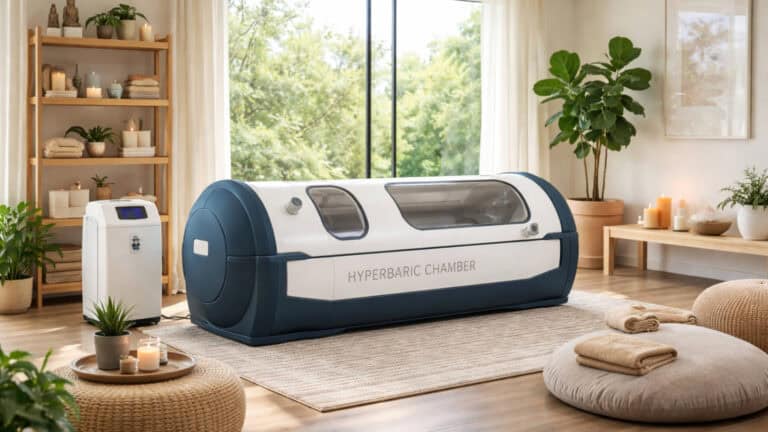
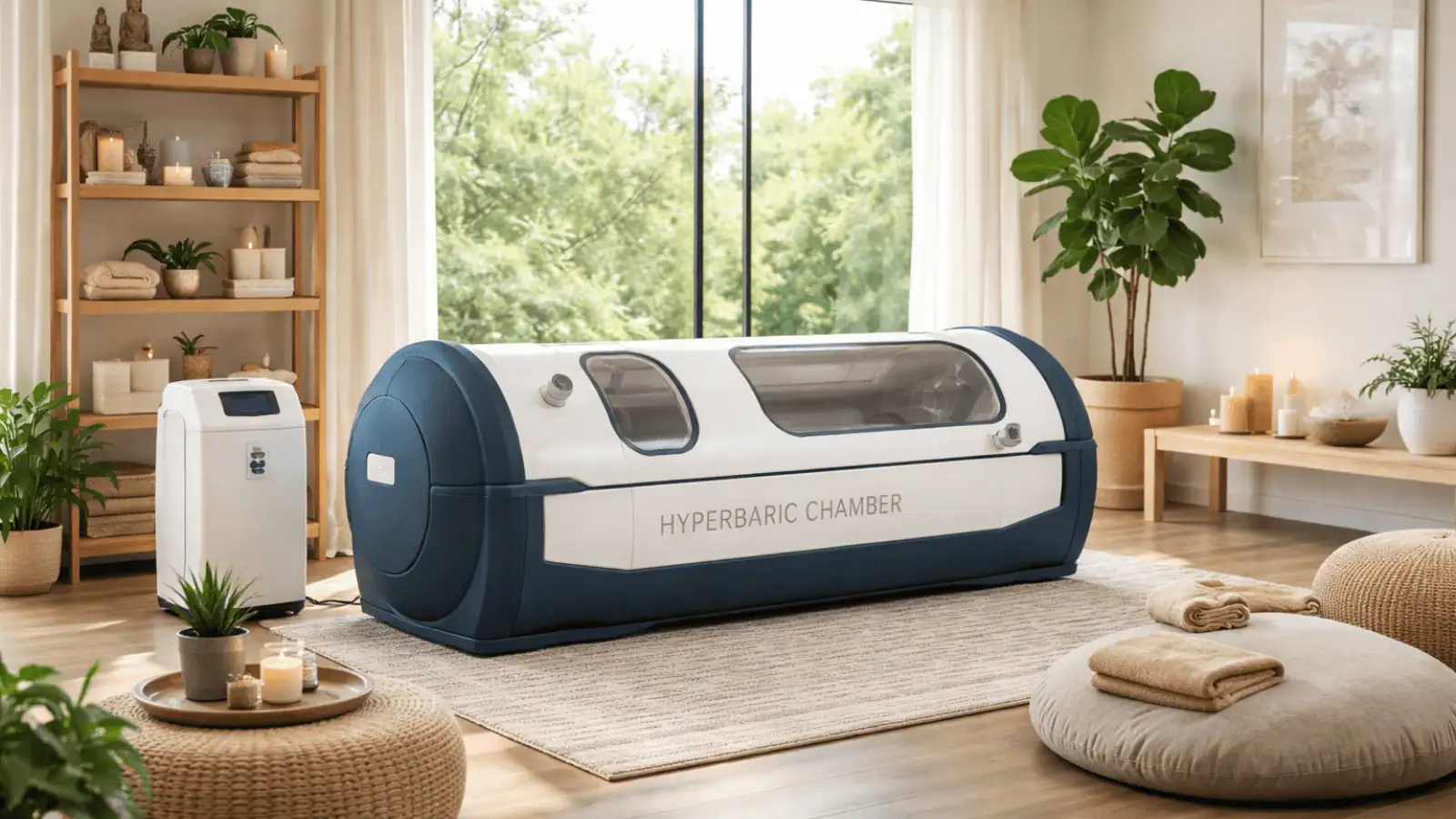
A chamber is often placed in a dedicated recovery room, a home gym, a spare bedroom, or a quiet wellness corner. It tends to work best for people who can build it into a repeatable rhythm rather than using it randomly. That may mean morning sessions, post-workout recovery windows, or calmer evening use depending on the chamber type, schedule, and professional guidance.

Readers interested in a broader recovery setup may also want to explore how to use hyperbaric oxygen therapy at home and compare it with goal-specific pages like HBOT for muscle recovery and HBOT for circulation support.
Who is most often drawn to HBOT for inflammation support?
Most people exploring this topic fall into a few broad categories:
- Performance-minded users who want better recovery support after high training volume.
- Wellness-focused home users building a daily or weekly recovery practice.
- People dealing with slow-feeling tissue recovery who are exploring supportive modalities.
- Research-oriented buyers comparing HBOT with other recovery tools.
What these groups have in common is not a single diagnosis. It is a desire for a more structured recovery system. HBOT may be attractive because it sits at the intersection of oxygen delivery, rest, and repeatability. Still, interest alone does not establish appropriateness. People with significant symptoms, active medical conditions, medication interactions, or safety questions should use a clinician-guided approach rather than a purely wellness-driven one.
What the research suggests — and what it does not
PubMed-indexed reviews increasingly describe HBOT as a therapy that may reduce certain pro-inflammatory signals, influence oxidative stress responses, and support tissue repair biology. A 2025 narrative review specifically discussed “oxy-inflammation” as a central concept in HBOT applications, while earlier reviews describe modulation of cytokines, growth factors, and repair pathways. 2025 PubMed narrative review 2021 PubMed review
But there are important limits. A mechanism is not the same thing as a guaranteed real-world outcome. Much of the strongest HBOT evidence is tied to specific medical indications and supervised treatment plans rather than general wellness use. So while the mechanistic rationale is promising, the phrase hyperbaric oxygen therapy for inflammation support should remain a support-oriented concept, not a cure claim.
That distinction helps keep expectations grounded. HBOT may support a recovery environment. It may be worth discussing as an adjunct. It should not be presented as an all-purpose answer for chronic inflammation, nor should it replace diagnosis, physical therapy, training adjustments, or physician-directed care where those are needed.

Realistic expectations for recovery-minded users
One of the biggest mistakes in this category is expecting a chamber to solve every recovery problem by itself. In practice, people usually get the most value from HBOT when it fits into a wider system that also includes:
- consistent sleep and schedule stability,
- appropriate exercise loading and deloading,
- hydration and nutrition,
- stress management, and
- enough time for recovery processes to actually work.
HBOT may support that system. It does not replace it. For example, someone dealing with post-training soreness may be deciding between a chamber, mobility work, better sleep discipline, and a smarter weekly training split. The chamber may be a strong addition, but it should be viewed as one layer of a thoughtful recovery stack rather than the entire stack.
Need the practical side of chamber shopping?
Compare styles, sizes, and home-use tradeoffs in our editorial guide: Compare the top chamber types →
How chamber choice changes the conversation
If your main interest is inflammation support, chamber selection still matters. Some people are drawn to mild home systems because they are easier to integrate into a household routine. Others prefer more robust systems because they want a broader range of use cases, more structured protocols, or different design features.
The right question is not just “Does HBOT support inflammation?” It is also “What kind of chamber realistically fits my space, budget, comfort level, and consistency habits?” Someone who can use a chamber regularly in a calm home environment may get more practical value from a system that is easy to live with than from a higher-end option that feels intimidating or disruptive.
For side-by-side education, you may want to review mild vs. hard-shell hyperbaric chambers and our roundup of the best mild hyperbaric chambers for home use.
When safety matters more than enthusiasm
Because HBOT is a real medical therapy, safety should stay front and center. Cleveland Clinic notes that side effects can include ear discomfort, sinus pressure, claustrophobia, and other treatment-related issues depending on the situation. Cleveland Clinic
That means inflammation support should never become a catch-all justification for self-experimentation. If you have active medical conditions, breathing concerns, recent surgery, ear-pressure problems, or you are trying to address unexplained pain or swelling, clinical guidance matters. Our page on HBOT side effects and how to use HBOT safely can help frame those questions more carefully.

When HBOT may fit well — and when it may not
HBOT may be a better fit for someone who values structured recovery, has room for a consistent home setup, understands the difference between support and treatment, and is willing to take a long-term view.
It may be a weaker fit for someone looking for instant relief, trying to bypass medical evaluation, or hoping the chamber will compensate for poor sleep, overtraining, or inconsistent recovery habits.
This is also why some people ultimately decide not to buy a chamber right away. They realize they first need to clarify goals: Is the priority general wellness, athletic recovery, circulation support, or a broader home recovery plan? Sometimes the best first step is reading the educational foundation pages, especially what HBOT is and what the evidence shows.
Frequently asked questions about hyperbaric oxygen therapy for inflammation support
Can HBOT reduce inflammation directly?
Research suggests HBOT may influence inflammatory signaling and oxidative stress pathways, but that does not mean it directly “turns off” inflammation in every context. It is more accurate to say HBOT may support a recovery environment in which tissue repair and inflammation resolution can function more effectively.
Is HBOT approved specifically for general inflammation support?
General inflammation support is not the same thing as an approved medical indication. HBOT has recognized medical uses, but broader wellness-oriented use should be discussed with appropriate caution and professional guidance where needed.
How long does it take to notice a difference?
That depends heavily on the reason for use, the treatment setting, the session plan, and the person’s broader recovery habits. Some people focus on consistency over time rather than expecting one session to create a major change.

Final thoughts on HBOT and inflammation support
Hyperbaric oxygen therapy for inflammation support is best understood as a cautious recovery topic, not a hype claim. The mechanism makes sense: higher oxygen delivery may support tissue repair, angiogenesis, and signaling pathways involved in recovery. Reviews and medical overviews also suggest HBOT may influence inflammatory biology in meaningful ways. But the smartest interpretation is still conservative: HBOT may support recovery conditions; it is not a guaranteed solution for every inflammatory concern.
For many people, the real decision is whether a chamber belongs in a broader home wellness system. If that is where you are in the process, the next step is usually not chasing bigger claims. It is comparing chamber categories, understanding safety, and deciding what type of routine you can actually sustain.
Keep exploring Hyperbaric Sage
Start with our buyer’s guide, review science-backed benefits, browse the blog, or contact us with your chamber research questions.