Oxyrevo Quest36 Review
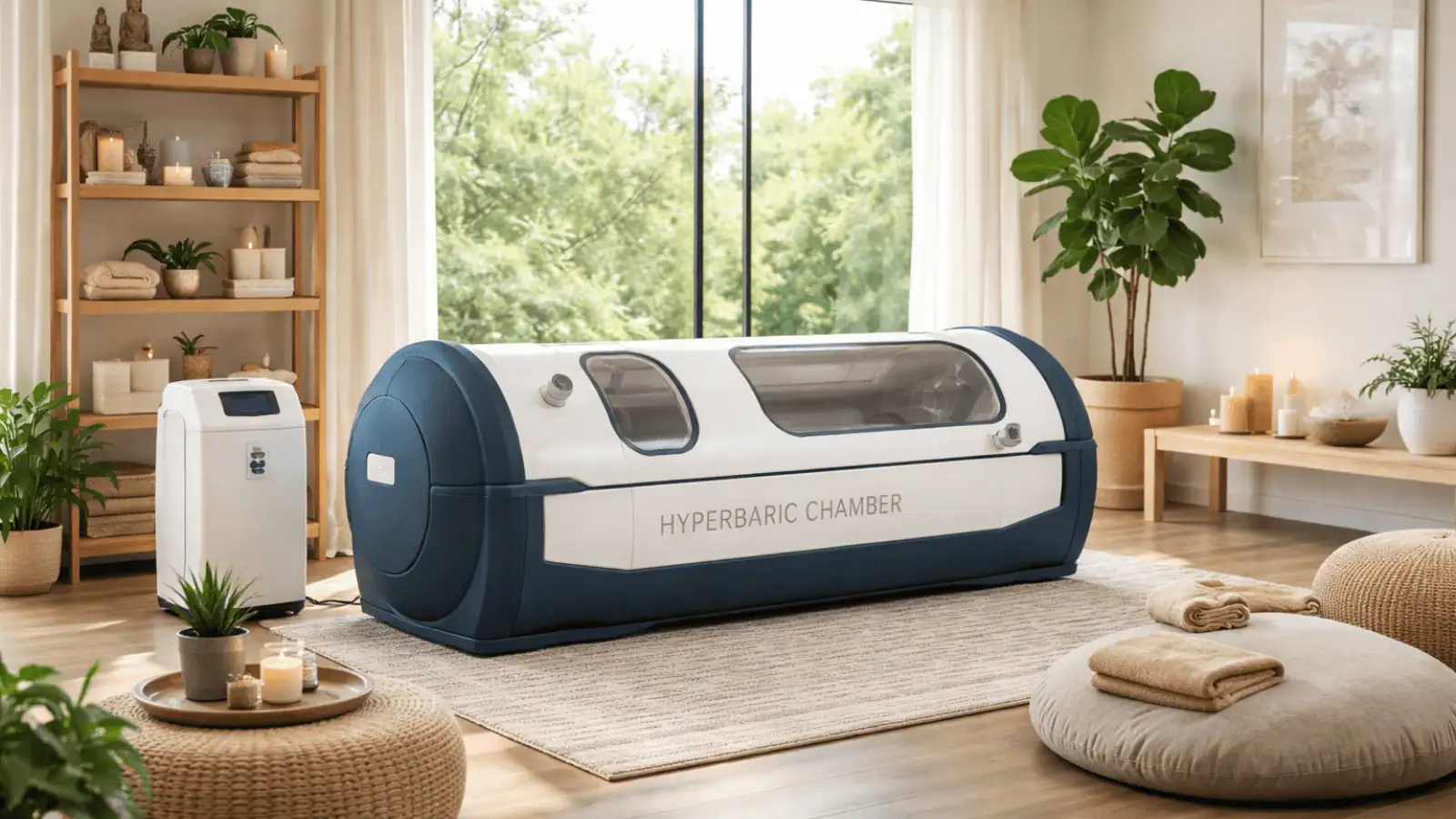
The Oxyrevo Quest36 sits in an interesting middle ground for buyers who want a more substantial hard-shell experience than entry-level soft-sided units can offer, but who still need something that feels practical for home or small-facility use. In this Oxyrevo Quest36 review, the main question is not simply whether the chamber looks impressive. It is whether its size, pressure capability, hard-shell build, and daily usability make sense for the way most people would actually use hyperbaric oxygen therapy in real life.
According to Oxyrevo’s official product materials, the Quest36 is a stainless-steel hard chamber measuring about 89 inches long by 36 inches in diameter, with operating configurations listed at 1.5 ATA, 1.6 ATA, and up to 2.0 ATA depending on configuration. Oxyrevo also positions it as a roomier option for larger users or for one adult with a child, which immediately tells you this is a chamber designed around comfort and interior space rather than bare-minimum footprint alone.
That matters because chamber shopping is often less about headline specs and more about how those specs affect actual ownership. A roomy chamber can feel far more approachable for longer sessions, but it also usually means more planning around placement, access, support equipment, ventilation, and maintenance expectations. For some buyers, that tradeoff is worth it. For others, a smaller or simpler chamber may be the better fit.
Compare the full lineup
If you are still deciding between chamber categories, start with our best hyperbaric oxygen chambers buyer’s guide →
What the Oxyrevo Quest36 is designed to be
The Quest36 is best understood as a large, hard-shell, single-user-oriented chamber with extra interior room. On Oxyrevo’s official hard-chamber pages, it is presented as a more spacious alternative to smaller hard-shell options, built from stainless steel and designed for buyers who want a sturdier, more enclosed, more premium-feeling setup than portable soft chambers typically provide.
That framing is important, because it sets expectations correctly. This is not the kind of chamber someone casually tucks into an unused corner without preparation. It is a more committed purchase that tends to fit buyers who value:
- more robust construction,
- a more substantial chamber experience,
- higher-pressure configuration options than many mild units,
- and more room inside the chamber during sessions.
In practical terms, the Quest36 appears aimed at a few likely user profiles: wellness-focused home buyers who want a premium setup, athletes or performance-oriented households that value routine recovery infrastructure, and smaller professional environments that want a hard-shell chamber without jumping immediately to a much larger medical-style system.
It also helps to note what it is not. It is not a lightweight entry-level chamber, not a casual trial purchase, and not the most discreet option for a standard bedroom or office. Buyers need to evaluate it as a serious equipment purchase with real space and logistics implications.
Pressure range and hard-shell design: why these specs matter
Hyperbaric oxygen therapy works by exposing the body to pressurized oxygen conditions that can increase the amount of oxygen dissolved in plasma and delivered through tissues. Mayo Clinic describes HBOT broadly as treatment delivered in an enclosed space with higher-than-normal air pressure, while broader scientific reviews explain that elevated pressure and oxygen exposure can increase dissolved oxygen availability and influence tissue-level repair processes. Mayo Clinic’s overview of hyperbaric oxygen therapy and a widely cited general review indexed on PubMed both provide useful background on why chamber pressure matters.

For the Quest36 specifically, Oxyrevo lists operating options at 1.5 ATA, 1.6 ATA, and up to 2.0 ATA. That makes the chamber notable because many home-oriented units stay in the mild range, while hard-shell buyers often want more flexibility and a more “professional-grade” feel. On paper, that gives the Quest36 a stronger positioning than purely mild, soft-sided home chambers.
Still, buyers should be careful not to oversimplify pressure as the only factor that matters. Real-world usefulness also depends on comfort, session consistency, setup ease, oxygen system design, support access, and whether the chamber’s complexity matches the buyer’s willingness to operate it consistently. A chamber that looks impressive but becomes inconvenient to use several times per week can be a worse fit than a less ambitious model that integrates more smoothly into daily life.
Interior space and comfort: one of the Quest36’s strongest selling points
One of the clearest reasons a buyer would choose the Quest36 over a smaller chamber is space. Oxyrevo lists the chamber at roughly 220 cm long and 90 cm in diameter, or about 89 inches by 36 inches. That larger diameter matters a lot more than many first-time buyers realize.
In home use, chamber comfort influences whether a routine feels sustainable. A tighter chamber can still work well, but extra interior room may make sessions feel less restrictive, especially for:
- larger-bodied users,
- users who dislike confined-feeling equipment,
- buyers planning longer routine sessions,
- and households that want a setup that feels more premium and less cramped.
Oxyrevo also notes that the chamber can accommodate one adult with a child, which suggests an interior layout intended to feel more generous than narrower single-user models. Even for solo use, that added space can improve perceived comfort and reduce the sense that every session is a claustrophobic commitment.

The tradeoff, of course, is that more room usually means more floor-planning effort. The Quest36 looks best for buyers who already have a designated recovery room, garage wellness area, clinic suite, or a large adaptable interior area rather than a tight multi-use living space.
What home setup may realistically look like
If you are considering the Quest36 for home use, the biggest practical question is probably not pressure. It is placement. A hard-shell chamber with an approximately 89-inch length and 36-inch diameter is not a tiny appliance. You need to think beyond the chamber’s shell dimensions and also account for:
- access around the chamber,
- door clearance,
- space for any connected support equipment,
- electrical needs,
- ventilation and temperature management,
- and a calm environment where regular sessions feel realistic.
For many buyers, the best fit will be a dedicated wellness room or recovery area rather than a bedroom where the chamber constantly competes with other furniture. The chamber may also make more sense in a performance-focused environment, such as a home gym recovery zone, where the equipment feels integrated into an existing routine rather than awkwardly inserted into everyday living space.

This is one reason the Quest36 seems better suited to buyers with a clear plan than to impulse buyers. If you can already picture exactly where it goes, how it will be accessed, and when it will be used each week, that is a strong sign the chamber may fit your life. If you are still hoping the logistics will somehow work themselves out later, it may be wiser to compare smaller categories first, including our guide to best mild hyperbaric chambers for home use.
How the Quest36 may fit into a real weekly routine
The Quest36 appears best for buyers who expect to use HBOT as an ongoing routine rather than an occasional experiment. Large chamber purchases tend to work best when the user already has a strong consistency mindset. That could mean morning recovery sessions, post-training use several days per week, or integration into a broader home wellness routine.
In practical terms, a chamber like this may appeal to people who want their hyperbaric setup to feel stable and permanent. A hard-shell unit often carries a psychological advantage here: it can feel like a dedicated recovery system instead of a temporary wellness gadget. For some people, that encourages consistency. For others, it can feel too formal or too equipment-heavy.
The Quest36 may be especially appealing for:
- buyers who dislike cramped-feeling chambers,
- users who want a hard-shell experience at home,
- athletes or recovery-focused households,
- small wellness businesses that want a more substantial presentation,
- and families prioritizing a long-term chamber purchase rather than a starter model.
It may be less ideal for buyers who are still unsure whether they will actually maintain a steady schedule. A chamber at this level makes the most sense when routine use is already part of the plan.
What the Oxyrevo Quest36 appears to do well
Based on Oxyrevo’s official product materials and the broader positioning of the model, the Quest36 has several clear strengths.
1. Spacious interior
This is arguably the biggest advantage. The 36-inch diameter gives the chamber a more comfortable feel than narrower models, which can matter for session adherence over time.
2. Hard-shell build
The stainless-steel construction gives the Quest36 a sturdier, more durable identity than soft-sided options. Buyers who want something that feels more substantial may strongly prefer this category.
3. Flexible pressure positioning
With listed configurations up to 2.0 ATA, the Quest36 occupies a more serious pressure category than many mild consumer chambers. That does not automatically make it the best choice for everyone, but it does make it more appealing for buyers specifically seeking that capability.
4. Better fit for larger users
Oxyrevo explicitly markets the chamber as roomier for athletes or larger-bodied users. That matters because comfort is often underappreciated during the shopping stage.
5. Strong visual and professional presence
For home owners building a high-end recovery room or small facilities that want clients to see a robust chamber setup, the Quest36 likely delivers a more premium impression than minimalist portable designs.
For broader category context, it is useful to compare this chamber class with our best hard-shell hyperbaric chambers roundup, where chamber size and structure become much easier to compare side by side.
Where the Quest36 may not be the right fit
No chamber is ideal for every buyer, and the Quest36 has a few obvious tradeoffs that should be considered honestly.
1. It asks for more space and planning
The same size that improves comfort also makes the chamber less forgiving in smaller homes. Buyers with tight layouts may find this model harder to accommodate cleanly.
2. It is probably more chamber than some people need
If your main priority is simply getting started with home HBOT in a lower-commitment way, a smaller mild or soft-sided chamber could feel more practical and less operationally intimidating.
3. Hard-shell ownership is a commitment
A hard-shell chamber tends to involve more deliberate setup thinking, more infrastructure planning, and a stronger “equipment footprint” in the home or facility. That can be a feature or a drawback depending on the buyer.
4. Bigger and more premium does not automatically mean better for you
Sometimes the best chamber is the one you will actually use consistently. Buyers should avoid chasing impressive specifications if a simpler model would integrate more smoothly into their real routine.

If your priority is ease, portability, or gentler home entry, you may get more value from reviewing the best soft-sided hyperbaric chambers before deciding whether a hard-shell model like the Quest36 is truly necessary.
Who the Oxyrevo Quest36 is best for, and who may want another option
Best for:
- buyers who specifically want a hard-shell chamber,
- people who value extra interior space,
- larger users or households that want a less cramped feel,
- athletic recovery environments,
- small professional settings that want a stronger visual presentation,
- and buyers who already have a dedicated space for long-term chamber ownership.
May not be ideal for:
- first-time buyers with uncertain commitment,
- homes where placement is already difficult,
- buyers prioritizing portability or flexibility,
- people who want the simplest possible operating experience,
- and shoppers whose needs could be met by a smaller mild chamber.
That distinction matters because the Quest36 looks strongest when chosen intentionally. It is not the chamber I would point every new buyer toward by default. It is the chamber I would point more serious, space-ready buyers toward when roomy hard-shell comfort is high on the priority list.
How the Quest36 compares in buying logic to other chamber categories
The Quest36 makes the most sense when viewed against three alternative buying paths.
Compared with mild home chambers
Mild chambers are often easier to place, easier to approach psychologically, and sometimes easier to live with in a standard home. The Quest36 gives up some of that simplicity in exchange for a more robust hard-shell identity and greater interior room.
Compared with soft-sided chambers
Soft-sided chambers may suit buyers who value flexibility, lower operational friction, and a softer entry into home HBOT. The Quest36 instead emphasizes sturdier structure and a more substantial chamber experience.
Compared with larger professional systems
For buyers exploring more clinic-oriented hard-shell options, the Quest36 may represent a more manageable point of entry while still preserving a premium feel. It looks like a chamber that tries to bridge home comfort and professional-style presence.
This is why chamber category education is so useful before buying. Our foundational guides on mild vs hard-shell hyperbaric chambers and hyperbaric chamber pressure levels explained can help you decide whether the Quest36’s category strengths line up with your actual goals.
Editorial verdict: is the Oxyrevo Quest36 a strong option?
Yes, for the right type of buyer, the Oxyrevo Quest36 looks like a credible, comfort-forward hard-shell option. Its strongest visible advantage is not just pressure flexibility. It is the combination of roomy interior dimensions, hard-shell stainless-steel build, and a more premium, serious ownership profile.

That said, the chamber is not automatically the best choice for everyone. Buyers should not confuse “larger and more serious” with “universally better.” The Quest36 is strongest when the buyer already knows they want:
- a hard-shell unit,
- more room inside the chamber,
- a long-term setup,
- and a chamber that fits a dedicated home or professional recovery space.
If that describes you, the Quest36 deserves serious consideration. If not, starting smaller may actually produce a better ownership experience. For official product details and current manufacturer presentation, buyers can review the Oxyrevo Quest36 product page.
Frequently asked questions about the Oxyrevo Quest36
Is the Oxyrevo Quest36 a mild hyperbaric chamber?
Not in the typical entry-level sense. Oxyrevo lists the Quest36 in its hard-chamber lineup with configurations at 1.5 ATA, 1.6 ATA, and up to 2.0 ATA, which places it beyond the simplest mild home category.
What is the main reason to choose the Quest36 over a smaller chamber?
The biggest reason is comfort and interior room. With its 36-inch diameter, the Quest36 appears better suited to buyers who want more space during sessions or who dislike cramped-feeling chambers.
Is the Quest36 appropriate for home use?
It can be, but only for homes with enough dedicated space and a realistic setup plan. This is not the most casual or compact chamber category, so placement and routine usability should be evaluated carefully before purchase.
Who is most likely to be happy with the Quest36?
Buyers who want a hard-shell chamber, already expect to use HBOT consistently, and have the room for a larger system are the most likely to appreciate what the Quest36 offers.
Final thoughts on the Oxyrevo Quest36 review
The Oxyrevo Quest36 stands out as a roomier hard-shell chamber for buyers who want a more substantial HBOT setup and are prepared for the planning that comes with it. Its appeal is strongest for people who prioritize interior comfort, structured routine use, and a more premium chamber feel over minimal footprint or beginner simplicity.
If your goal is to compare this model against the broader market, visit our best hyperbaric oxygen chambers guide. If you want category-specific comparisons, the next best step is to review our hard-shell chamber roundup. You can also browse more analysis in the Hyperbaric Sage blog or reach out through our contact page if you want help narrowing the category before buying.
Not sure which chamber style fits you?
Start with the full category overview in our buyer’s guide to the best hyperbaric oxygen chambers →