Hyperbaric Oxygen Therapy for Recovery & Wellness
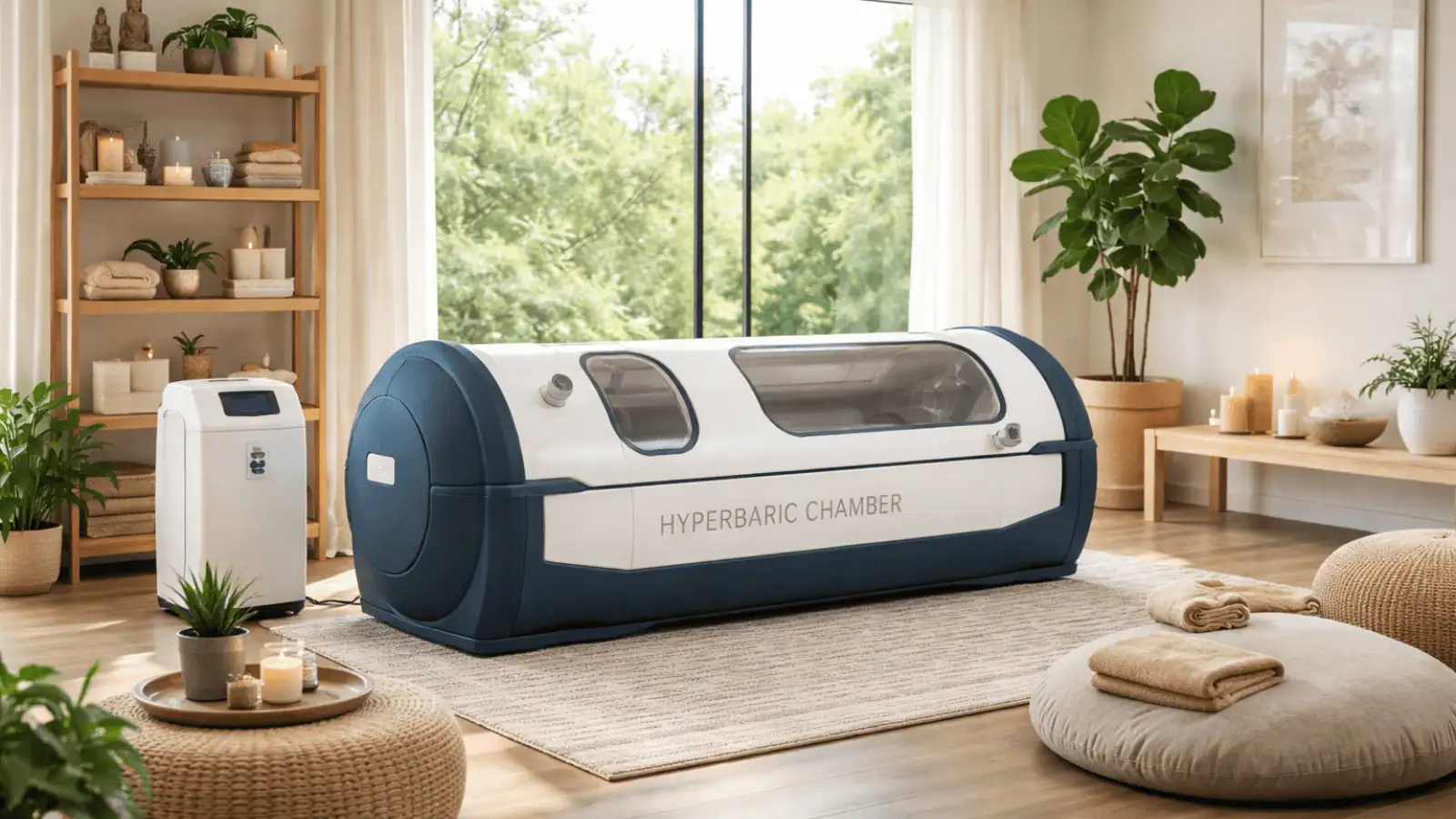
Interest in hyperbaric oxygen therapy for recovery and wellness has grown well beyond clinical wound-care settings. Many people now explore HBOT as part of a broader recovery routine focused on consistency, oxygen support, and day-to-day resilience. The appeal is understandable: the therapy combines pure oxygen with increased atmospheric pressure, which can raise the amount of oxygen dissolved in plasma and improve oxygen delivery into tissues that may not receive as much support under normal conditions. Mayo Clinic’s HBOT overview and NIH/StatPearls both describe this core mechanism clearly.
That said, recovery and wellness are broad goals. HBOT is not a shortcut, a cure-all, or a replacement for medical care, sleep, nutrition, movement, or structured rehabilitation. A more realistic framing is that it may support recovery processes by improving oxygen availability, which is one reason it continues to be studied across wound healing, inflammation, tissue support, and performance-adjacent use cases.
On this page, we’ll look at how HBOT fits into a broader recovery strategy, what a reasonable home-use mindset looks like, what results people often expect versus what is more realistic, and how to think about consistency before investing in a chamber or routine.
Comparing chamber options?
See our editorial overview of the best hyperbaric oxygen chambers to understand the major categories before building a home routine.
What “recovery and wellness” means in an HBOT context
When people talk about recovery, they are often combining several different goals into one phrase. They may want to feel less worn down after training, recover better from stressful weeks, support tissue repair after a demanding period, or simply create a more structured wellness routine that emphasizes rest and consistency.
In that context, HBOT is usually discussed as a support tool rather than a standalone answer. It may fit into recovery conversations in a few practical ways:
- Post-exertion support: people looking to improve how they feel after demanding physical effort.
- Routine-based wellness: those building a structured system around sleep, hydration, mobility work, and recovery time.
- Tissue support: especially where oxygen delivery and recovery capacity are part of the bigger picture.
- Mental decompression: not because the chamber “treats” stress directly, but because a scheduled session often creates protected downtime.
The important distinction is that wellness use should still be approached with medical common sense. HBOT is a real physiologic intervention, not just another spa-style add-on. That is why readers should also review our guide to how to use hyperbaric oxygen therapy safely before making it part of a regular plan.
How hyperbaric oxygen therapy may support recovery processes
The basic idea behind HBOT is straightforward: when you breathe oxygen in a pressurized environment, more oxygen can dissolve into plasma and move through the body beyond what red blood cells alone normally carry. That change in oxygen availability is one reason HBOT has drawn medical and research attention for tissue support and healing-related pathways. Cleveland Clinic explains that HBOT is used to help support healing by increasing oxygen delivery, while recent review literature indexed in PubMed continues to examine HBOT’s role in surgical and healing-focused settings.
For recovery, the mechanisms people are usually most interested in include:
- Higher oxygen saturation in plasma during the session.
- Support for tissue repair processes that rely on adequate oxygen availability.
- Angiogenesis-related support, meaning the body’s ability to support new blood vessel development in certain contexts.
- Inflammation-related signaling effects that are being studied in a range of recovery discussions.
That does not mean everyone will notice the same outcomes, and it does not mean the therapy is appropriate for every goal. But from a recovery standpoint, the physiologic rationale is more substantial than many wellness tools because it is tied to measurable changes in oxygen exposure under pressure.

Why oxygen delivery matters for feeling recovered
People often describe recovery as a subjective feeling: less drained, less heavy, less mentally foggy, or more ready for the next day. But underneath those feelings are physical processes that depend on circulation, tissue support, metabolic demand, and time.
HBOT does not override those fundamentals, yet it may support them by increasing oxygen availability while you are in the chamber. That is why the therapy is frequently discussed in relation to tissues under higher repair demand. If your broader recovery plan is already solid, HBOT may act more like a supportive layer than a replacement for the basics.
From a practical standpoint, this matters because many people expect one dramatic session to create a major change. In reality, recovery-focused use is usually better understood as a cumulative strategy. Consistency, session spacing, sleep quality, nutrition, and total stress load all influence whether a person feels that HBOT is helping.

Common real-world reasons people look at HBOT for wellness
Outside of formal medical indications, wellness-minded users often explore HBOT for reasons that sit somewhere between performance support and everyday resilience. Common examples include:
- building a better post-workout recovery rhythm
- supporting recovery after travel or stressful work periods
- creating protected quiet time in an otherwise demanding schedule
- supporting wellness during periods of high training volume
- pairing HBOT with structured recovery habits such as breathwork, stretching, hydration, and sleep routines
These are reasonable framing categories because they focus on support, not cure claims. A home user might schedule sessions in the morning as part of a weekly recovery plan, while another might use HBOT later in the day when the goal is to create a calm, uninterrupted recovery window. The exact routine matters less than whether it is sustainable.

What to expect from a recovery-focused HBOT routine
A realistic expectation is that HBOT may feel most useful when it is part of a broader recovery system. People who build it into an intentional routine tend to think about:
- frequency: using it often enough to judge consistency rather than novelty
- timing: placing sessions where they fit naturally into work, training, or recovery cycles
- environment: creating a quiet, comfortable setup that encourages actual rest
- tracking: paying attention to sleep quality, energy, soreness, and overall readiness over time
Our separate guide on HBOT session duration and frequency covers scheduling in more detail, but the key point here is simple: recovery support is usually measured over weeks, not isolated sessions.
That also means disappointment often comes from expecting HBOT to compensate for poor fundamentals. If sleep is inconsistent, training load is excessive, and stress remains unmanaged, HBOT may still be interesting, but it is unlikely to feel like the missing piece on its own.
How HBOT may fit into a home wellness routine
For home users, practical setup is often just as important as chamber specifications. A chamber that technically fits your room but disrupts your daily flow may get used far less than expected. The most successful home routines usually feel simple and repeatable.
That may look like:
- a dedicated corner with enough clearance for setup and access
- a consistent time block that does not compete with work or family logistics
- a calm environment where the session feels restorative rather than rushed
- easy access to hydration, comfortable clothing, and post-session downtime
Someone using HBOT for recovery often benefits from thinking in routines, not events. A chamber placed in a home gym recovery area creates a different pattern than one located near a bedroom or office wellness corner. Neither is inherently better; the better choice is the one that supports regular use.

How HBOT compares with other recovery tools
HBOT is often compared with tools like cold exposure, sauna use, compression systems, massage, and breathwork. Those comparisons can be helpful, but they are not one-to-one. Most recovery tools work through different mechanisms and serve different user preferences.
HBOT stands out because it is centered on oxygen under pressure rather than temperature stress, mechanical compression, or sensory relaxation. That makes it appealing to people who want a recovery modality with a more direct physiologic rationale tied to oxygen delivery. On the other hand, it is also more equipment-intensive and usually requires more planning than simpler wellness habits.
In many real homes, the better question is not “HBOT or everything else?” but “Where does HBOT belong in the stack?” For some people, it becomes a higher-commitment anchor habit. For others, it may be more useful only during demanding phases of training, work, or recovery.
Need a chamber category breakdown?
Start with our comparison of top hyperbaric oxygen chamber types before deciding whether mild, soft-sided, or more advanced systems make the most sense for your space.
Who may benefit most from this kind of recovery-focused framing
A recovery-and-wellness approach to HBOT usually makes the most sense for people who are already fairly process-oriented. That includes users who:
- value consistency over hype
- want a structured recovery practice they can repeat at home
- understand that support tools work best alongside sleep, nutrition, and training balance
- prefer an evidence-aware wellness approach rather than exaggerated claims
It may be a weaker fit for someone looking for immediate transformation, a casual plug-in gadget experience, or a replacement for proper medical evaluation. If you are unsure where you fall on that spectrum, our guide on whether hyperbaric oxygen therapy is right for you is a useful next read.
Important limitations to keep in mind
HBOT is often presented online as if it can do everything. That is one of the biggest reasons careful framing matters. Even though oxygen under pressure has real physiologic effects, those effects do not justify broad disease claims or a casual do-it-yourself attitude.
Some people are not good candidates for HBOT, and treatment planning can require attention to underlying conditions, medications, ear and sinus pressure issues, and other contraindication questions. NIH/StatPearls on contraindications and NIH/StatPearls on complications both reinforce why screening and proper supervision matter.
That is especially true when recovery use begins to overlap with clinical concerns. If the goal shifts from wellness support to a condition-specific need, that conversation should move into a qualified medical setting rather than staying in the realm of general wellness content.

Questions to ask before making HBOT part of your routine
Before investing time, money, or home space into HBOT, it helps to ask a few grounded questions:
- What is my main reason for using it? Recovery support, post-exertion support, routine-based wellness, or something more condition-specific?
- Can I use it consistently? A chamber that sits unused rarely becomes a meaningful recovery tool.
- Does my home setup support calm use? Noise, placement, and schedule friction all matter.
- Am I comparing the right chamber categories? Pressure range, comfort, space, and workflow all affect long-term fit.
- Have I looked at safety first? Recovery goals do not remove the need for proper screening and sensible use.
These questions often prevent the biggest mistake in wellness equipment: buying based on excitement rather than realistic use patterns.
Frequently asked questions about hyperbaric oxygen therapy for recovery and wellness
Can HBOT replace sleep, nutrition, or deload periods?
No. HBOT may support recovery, but it does not replace the foundations that drive resilience and repair. It works best as an added layer, not a substitute.
Is HBOT only for injuries or medical conditions?
No. Many people explore it for broader recovery and wellness reasons, but that should still be done with a safety-first mindset and realistic expectations.
How quickly do people usually notice anything?
That varies widely. Some people focus on how they feel after individual sessions, while others only feel able to judge value after building a consistent routine over time.
Does a home recovery setup need to be complicated?
Usually not. The best setup is often the one that is calm, practical, and easy to repeat. Consistency matters more than overcomplicating the environment.

Final thoughts on HBOT for recovery and wellness
Hyperbaric oxygen therapy deserves a balanced explanation. It is more substantial than many trend-driven wellness tools because it changes oxygen exposure in a measurable way under pressure. At the same time, it should not be treated like a universal fix.
The strongest recovery-and-wellness use case is usually the most disciplined one: someone who understands the basics, values consistency, respects safety, and wants HBOT to complement a broader recovery system rather than replace it. That mindset leads to better decisions, better chamber selection, and more realistic expectations.
If you are still comparing options, start with the editorial basics, then move into category-specific chamber research. That approach tends to be much more useful than jumping straight into product shopping without understanding how HBOT actually fits into a recovery plan.
Next step: learn the chamber landscape
Browse our buyer’s guide, read the benefits page, explore the Hyperbaric Sage blog, or contact us if you want help navigating the major chamber categories.