What Is Hyperbaric Oxygen Therapy?
If you have been asking what is hyperbaric oxygen therapy, the short version is this: it is a treatment approach in which a person breathes oxygen in a pressurized chamber so the body can carry more oxygen in the blood and plasma than it can under normal atmospheric conditions. Major medical centers describe hyperbaric oxygen therapy, often shortened to HBOT, as a treatment delivered in a sealed chamber at pressures higher than normal room pressure, usually with very high oxygen concentration during the session. See the overviews from Mayo Clinic, Cleveland Clinic, and the physiology summary in the NCBI Bookshelf.
That simple definition only tells part of the story. People usually want to know what HBOT is for, what it feels like, how it works, whether home chambers are the same as clinical systems, and what realistic expectations should look like. This guide answers those beginner questions in plain English while staying careful with claims. Hyperbaric oxygen therapy is a real medical modality, but it is not a magic fix, and it should not be discussed as though it guarantees outcomes.
On Hyperbaric Sage, we use conservative language because HBOT sits close to health decision-making. That means this page focuses on mechanisms, practical setup, and evidence-aligned expectations rather than exaggerated promises.
Want the device side of the topic next?
After this beginner guide, compare chamber categories in our Best Hyperbaric Oxygen Chambers buyer’s guide →
What hyperbaric oxygen therapy actually means
At the most basic level, hyperbaric oxygen therapy combines two variables at the same time: higher-than-normal pressure and high-oxygen exposure. That combination changes how oxygen is delivered through the body. According to Mayo Clinic, the therapy increases oxygen delivery by placing someone in an enclosed chamber with pressure above normal atmospheric levels. The NCBI Bookshelf overview similarly describes HBOT as oxygen delivered in a pressurized environment above ambient pressure. Mayo Clinic NCBI Bookshelf
That matters because ordinary breathing already loads oxygen onto hemoglobin in red blood cells, but pressurized oxygen can also increase the amount of oxygen dissolved in plasma. In beginner terms, HBOT is a way of pushing oxygen delivery beyond what standard breathing in a normal room can usually accomplish. A general review indexed by PubMed describes HBOT as pure oxygen used at increased pressure, often in the 2 to 3 atmosphere range in medical settings. PubMed overview
For someone new to the topic, it helps to think of HBOT as a delivery environment, not just an oxygen tank. The chamber and its pressure are part of the treatment itself. Without the pressure component, it is not the same modality.

What happens during a typical hyperbaric session
A session usually starts with screening, instructions, and chamber preparation. In clinical settings, a person may lie in a monoplace chamber or sit in a larger multiplace chamber. Mayo Clinic shows both approaches: an individual clear chamber for one person or a larger room-like chamber where oxygen may be delivered through a hood. Mayo Clinic monoplace example Mayo Clinic multiplace hood example
As the chamber pressurizes, many people notice ear pressure similar to airplane takeoff or driving up a steep elevation change. That is one of the most commonly described sensations. Cleveland Clinic notes that side effects can include ear discomfort, sinus pressure, and claustrophobia, which is one reason proper screening and supervision matter. Cleveland Clinic
Once at the target pressure, the person remains in the chamber for the prescribed treatment time. In a clinic, that may feel more structured and medical. In a home-oriented mild chamber setup, the routine often feels more like a scheduled wellness session: enter the chamber, settle in, breathe normally, and remain consistent with the plan that has been recommended. The point is not drama. The point is controlled exposure under the right conditions.
After the session, the chamber gradually depressurizes. Some people go straight back to the rest of their day. Others prefer to keep the post-session window calm, especially if HBOT is part of a larger recovery or wellness routine.
How hyperbaric oxygen therapy works in the body
Most beginner explanations stop at “more oxygen,” but the more useful explanation is that pressure changes oxygen availability. In a pressurized chamber, oxygen can dissolve into plasma at higher levels than under normal atmospheric conditions. That change is part of why HBOT is studied and used in settings involving tissue oxygenation, wound support, and recovery processes. The NCBI Bookshelf explanation of hyperbaric physics covers this foundational principle, and Cleveland Clinic also notes that HBOT increases oxygen in the bloodstream. NCBI Bookshelf Cleveland Clinic
From there, the discussion often moves into downstream effects. Research reviews describe HBOT as being associated with improved tissue oxygenation and signaling pathways involved in healing and recovery, including angiogenesis and inflammatory modulation. Those are important concepts, but they should be framed carefully. They do not mean every person will experience the same benefit or that HBOT is automatically appropriate for every goal. Clinical evidence review 2025 evidence review
That is why thoughtful HBOT education separates mechanism from marketing claims. The mechanism is real and measurable. The practical takeaway is that HBOT may support certain recovery and tissue-oxygenation goals when used appropriately, but the best case for any individual depends on context, chamber type, pressure level, and clinical judgment where relevant.

Medical HBOT versus general wellness interest
One reason this topic can feel confusing is that “hyperbaric oxygen therapy” is used in both medical and wellness conversations. In hospitals and wound-care programs, HBOT is an established medical treatment for certain specific indications. Cleveland Clinic and other medical centers describe its clinical role in wound-related care and selected other conditions. Cleveland Clinic overview Cleveland Clinic wound center
At the same time, there is strong consumer interest in home chambers for recovery, performance, routine support, and broader wellness goals. That consumer interest does not erase the fact that HBOT is still a health-adjacent modality with real contraindications, pressure considerations, and quality differences between systems. Beginners should keep that balance in mind. A chamber is not just another wellness gadget.
The safest way to think about the distinction is this:
- Clinical HBOT is guided by diagnosis, protocol, pressure selection, and medical supervision.
- Home or consumer interest often focuses on convenience, routine use, and lower-barrier access, but still requires caution and informed decision-making.
If your interest is mostly practical, a strong next read is How to Use Hyperbaric Oxygen Therapy at Home. If your interest is safety-first, start with How to Use Hyperbaric Oxygen Therapy Safely.
What kinds of chambers are used for HBOT
Not all hyperbaric chambers are the same. That matters because many beginners hear “hyperbaric oxygen therapy” and assume all systems deliver the same experience. They do not. Broadly speaking, the market includes clinical hard-shell chambers, soft-sided home-oriented chambers, and different pressure ranges and oxygen-delivery methods depending on the setting.
Medical centers may use monoplace or multiplace chambers capable of operating at higher pressures than most consumer systems. Home-oriented mild hyperbaric chambers are often chosen for convenience, space efficiency, and lower operating complexity. That does not make them interchangeable. Pressure level, oxygen delivery, chamber size, noise, setup requirements, and intended use all shape the experience.
For a new buyer or researcher, this is often the first major decision point:
- Do you want to understand the therapy itself?
- Do you want to compare chamber categories?
- Do you want to know whether a mild system or a harder-shell system is the more realistic fit?
Those are separate questions. If you are ready for that comparison, see Mild vs Hard-Shell Hyperbaric Chambers and Hyperbaric Chamber Pressure Levels Explained.

What HBOT looks like in real-world home and clinic routines
For many people, the most useful beginner question is not “what is the theory?” but “what does HBOT actually look like in day-to-day life?” In a clinic, the answer may involve scheduled visits, staff supervision, and a more formal care setting. In a home setting, the answer usually revolves around consistency, chamber placement, session timing, and household logistics.
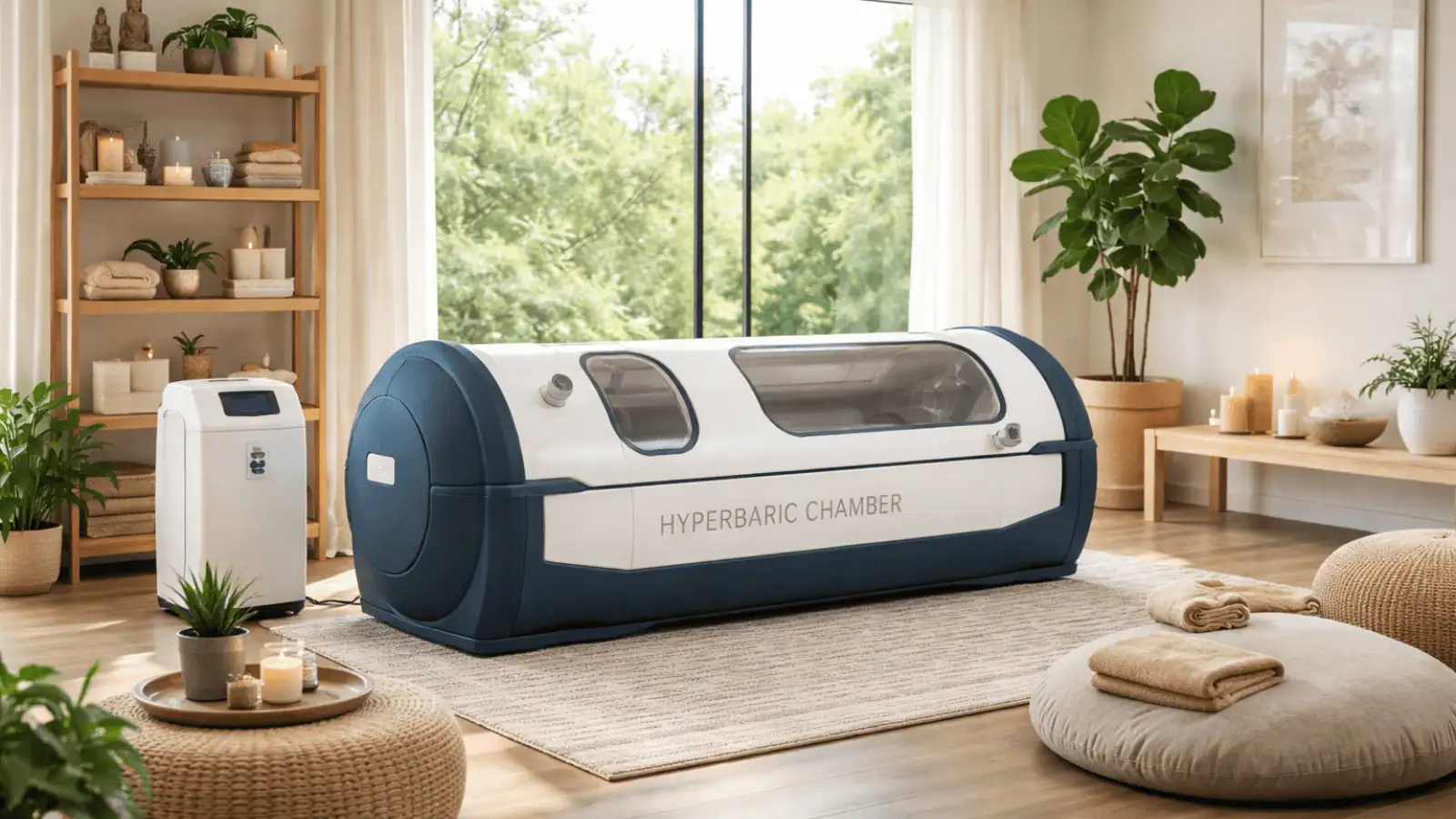
A home chamber is not invisible. It takes up floor space, requires setup attention, and becomes part of the rhythm of a room. Some users want it near a home gym, some prefer a quiet recovery room, and others place it near a bedroom or office-adjacent wellness area. The best setup is typically the one that supports repeatable use without turning the chamber into an obstacle.
That practical layer matters because consistency is part of how people evaluate whether HBOT fits their life. A chamber that looks impressive but is too cumbersome for regular use may be a poor match. A simpler setup that realistically supports a daily or weekly routine may be more sustainable. This is one reason we treat chamber evaluation as a lifestyle decision as much as a spec-sheet decision.

What hyperbaric oxygen therapy may support
HBOT is commonly discussed in relation to recovery, tissue oxygenation, wound support, and selected medical indications. More recent reviews also discuss effects on inflammation signaling, oxidative stress responses, and cellular repair pathways. But careful wording matters here. “May support” is the right frame for a beginner educational article because results depend on the person, the indication, the protocol, and the chamber setting. 2025 evidence review Clinical evidence review
For general education, HBOT is often explored in conversations around:
- recovery support after physical strain
- tissue oxygenation
- structured wellness routines
- clinical wound-healing protocols under medical supervision
- broader research questions involving neurological and inflammatory pathways
The right takeaway is not that HBOT is a cure-all. The better takeaway is that HBOT is a serious oxygen-delivery intervention with plausible mechanisms that justify interest, but it should always be matched to realistic goals and appropriate guidance.
Exploring benefits next?
For a broader science-aligned overview, visit Hyperbaric Oxygen Therapy Benefits: Backed by Science →
Why safety and screening are part of the definition
It is impossible to answer “what is hyperbaric oxygen therapy” honestly without mentioning safety. Because HBOT involves a pressurized environment and high-oxygen exposure, it is not something to treat casually. Medical references note that HBOT is generally well tolerated, but it still requires patient selection, screening, and risk review. Commonly discussed issues include ear barotrauma, sinus discomfort, confinement-related anxiety, and the need to review contraindications before treatment. Cleveland Clinic NCBI contraindications review NCBI patient selection review
That does not mean HBOT is inherently unsafe. It means it is a real intervention. People with medical conditions, a history of pressure-related ear issues, certain lung concerns, or other relevant factors should be evaluated appropriately before using a chamber. In other words, screening is not an optional extra. It is part of the responsible use framework.
This is also where the difference between good education and bad marketing becomes obvious. Good education helps you understand both the upside and the boundaries. Bad marketing ignores the boundaries.

Who usually becomes interested in HBOT
Interest in HBOT usually falls into a few broad groups. Some people first hear about it through wound care, specialty clinics, or physician recommendations. Others discover it through athletic recovery, longevity discussions, or general wellness communities. A third group comes in from the buyer side, comparing chamber types for home use before they fully understand the therapy itself.
These groups often have very different needs:
- Clinically guided users tend to care most about safety, protocol, and the medical rationale.
- Recovery-focused users often care about routine fit, comfort, and post-exertion support.
- Home buyers usually care about pressure range, space, cost, and long-term usability.
That is why beginner education should come before product comparison. If you understand what HBOT is, what pressure does, and what realistic use looks like, you make much better decisions when comparing chambers later.
For product research, our Hyperbaric Oxygen Therapy Blog and buyer’s guide organize those next-step decisions more clearly.
Common beginner misunderstandings about hyperbaric oxygen therapy
Misunderstanding 1: HBOT is just breathing oxygen.
Not exactly. The pressurized environment is part of the therapy. Oxygen alone, without the pressure component, is not the same intervention.
Misunderstanding 2: All chambers are basically equal.
They are not. Chamber type, pressure level, oxygen delivery method, size, and intended use vary meaningfully.
Misunderstanding 3: More pressure is always better.
That is too simplistic. Appropriate pressure depends on the goal, the setting, and the protocol. Bigger numbers do not automatically equal a better fit.
Misunderstanding 4: HBOT should produce dramatic results immediately.
That is not a reliable expectation. Many modalities linked to recovery or tissue support are evaluated over time and in context. A thoughtful plan matters more than hype.
Misunderstanding 5: If it is sold for home use, it needs no caution.
Home use still requires informed decision-making, realistic expectations, and attention to safe operation.

Frequently asked questions about HBOT
Is hyperbaric oxygen therapy the same as regular oxygen therapy?
No. Regular oxygen therapy provides extra oxygen, but HBOT combines oxygen with increased atmospheric pressure inside a chamber. That pressure component changes how oxygen is carried and dissolved in the body. Cleveland Clinic oxygen therapy overview NCBI hyperbaric physics overview
Does HBOT always happen in a hospital?
No. HBOT can be delivered in hospital-based or clinic-based settings, and there is also consumer interest in home-oriented mild chambers. But the setting does not remove the need for safety screening and informed use.
What does a session feel like?
Many people mainly notice pressure in the ears during pressurization and depressurization, similar to altitude changes. Comfort, chamber design, and anxiety level can also shape the experience. Cleveland Clinic
Is HBOT only for serious medical conditions?
No, but the strongest clinical use cases are medical. Outside that context, many people explore HBOT for recovery, performance, or general wellness support. The appropriate use case depends on goals, supervision, and the specific chamber setup.
Where should I go after learning the basics?
Start with chamber categories, safety, and benefits. On this site, the best next pages are our safety guide, our benefits page, and our buyer’s guide.
What is hyperbaric oxygen therapy, in plain English?
Hyperbaric oxygen therapy is a pressurized oxygen-delivery treatment that increases oxygen availability beyond what normal breathing in a standard room usually provides. That makes it relevant both in clinical care and in broader recovery and wellness conversations. The most useful beginner understanding is not just that HBOT involves “more oxygen,” but that it uses a controlled chamber environment, pressure, and oxygen together in a way that can influence tissue oxygenation and related physiological processes.
It is also important to keep the topic grounded. HBOT is promising and well established in certain medical contexts, but it is not something to discuss casually or oversell. Good HBOT education respects the mechanisms, the limitations, the safety considerations, and the reality that different chamber types serve different needs.
If you want to keep learning in the right order, begin with safety and chamber comparison before jumping into product shopping.
Continue your HBOT research
Compare chamber categories in our Best Hyperbaric Oxygen Chambers guide, review the science-backed benefits page, or reach out through our contact page if you want help navigating the topic.