Hyperbaric Oxygen Therapy for Muscle Recovery
Hyperbaric Oxygen Therapy for Muscle Recovery is getting more attention from athletes, active adults, and people exploring advanced recovery tools at home. The appeal is understandable: HBOT exposes the body to oxygen in a pressurized setting, which can increase oxygen delivery and may support tissue repair processes after demanding training or injury. At the same time, the evidence is still mixed depending on what someone expects it to do.
That distinction matters. Hyperbaric oxygen therapy is not a magic shortcut, and it should not be framed like one. The strongest case for HBOT in this context is not “instant soreness relief.” Instead, the more reasonable discussion centers on whether better oxygen availability may support healing, inflammation balance, and return-to-training timelines in certain recovery situations. A recent systematic review found benefit for exercise-induced muscle injury, but not a clear benefit for ordinary muscle soreness alone. That is an important reality check for anyone considering this modality as part of a broader recovery routine.
Comparing home chamber options?
If you want to understand the broader device landscape before diving deeper into recovery topics, see our Best Hyperbaric Oxygen Chambers buyer’s guide →
What muscle recovery actually involves after training or strain
Muscle recovery is more than “feeling less sore.” After a hard workout, repeated sprint session, heavy lifting block, or minor soft-tissue strain, the body moves through a sequence of repair and adaptation processes. These include restoring normal oxygen balance in stressed tissue, managing localized inflammation, clearing metabolic byproducts, rebuilding damaged fibers, and gradually returning function. In practical terms, someone may judge recovery by less stiffness, better range of motion, improved performance in the next session, or a more normal feeling during everyday movement.
This is why recovery tools need to be evaluated carefully. A modality might help one part of the process without dramatically changing another. For example, something may support tissue healing but not meaningfully erase delayed-onset muscle soreness. That nuance shows up repeatedly in the HBOT literature and is one reason exaggerated marketing claims should be avoided.
For a bigger picture on how this category fits into broader performance routines, see our related post on hyperbaric oxygen therapy for exercise recovery.
How hyperbaric oxygen therapy may support muscle recovery
Hyperbaric oxygen therapy increases oxygen delivery by exposing the body to pure oxygen in a chamber with higher-than-normal pressure. Major medical sources describe this as a way to raise the amount of oxygen your lungs can take in and the amount transported through the body, particularly to stressed or damaged tissues. Mayo Clinic notes that HBOT increases oxygen delivery by providing pure oxygen in an enclosed space under higher air pressure, while Cleveland Clinic explains that the increased pressure helps blood carry more oxygen through the body and into injured tissues.
From a recovery perspective, that matters because muscle repair is energy-intensive. Tissues dealing with microtrauma, swelling, or relative hypoxia may function better when oxygen availability improves. In conservative terms, HBOT may support:
- oxygen availability in stressed tissue,
- cellular repair and regeneration processes,
- the body’s normal inflammatory response,
- angiogenesis and circulation support over time,
- overall recovery capacity when used within a medically appropriate plan.

For a deeper physiology breakdown, you can also read how hyperbaric oxygen therapy works at the cellular level.
What the research says about HBOT and muscle recovery
The current evidence is promising in some areas, but it is not uniform. A 2025 systematic review and meta-analysis indexed by PubMed concluded that HBOT was statistically effective in promoting recovery from exercise-induced muscle injury, but it did not enhance recovery from exercise-induced muscle soreness. That is one of the most useful takeaways for readers trying to separate realistic expectations from hype.
Older and broader reviews have reached similarly cautious conclusions. A review available through PubMed Central discusses HBOT as a potentially helpful adjunct for early recovery in exercise-related muscular injury. Other literature has suggested possible benefits in soft-tissue healing and inflammation modulation, but not enough consistency to say everyone should expect dramatic performance gains from routine use alone.
For active people, the practical interpretation is this: HBOT may be more relevant when there is a meaningful recovery burden to address, such as a harder injury-repair context, persistent tissue stress, or a medically supervised rehabilitation goal. It appears less convincing as a simple “I’m sore after leg day” solution.
Muscle soreness versus muscle injury: why that distinction matters
Many people search for recovery tools when what they really mean is soreness relief. But soreness and injury are not the same thing. Delayed-onset muscle soreness can be unpleasant, yet it is often a temporary training response that improves with time, sleep, nutrition, hydration, and smart programming. Muscle injury or more significant tissue strain involves a different level of disruption and a more serious recovery demand.
HBOT may make more sense in the second scenario than the first. If the goal is tissue support after significant exertion, a strain, or a structured rehab context, the oxygen-delivery argument becomes more relevant. If the goal is simply to feel less achy after a hard session, the current evidence does not support portraying HBOT as a reliable soreness cure.

This distinction also connects closely with inflammation management. For more on that angle, visit hyperbaric oxygen therapy for inflammation support.
Who may consider hyperbaric oxygen therapy for muscle recovery
HBOT may be worth discussing with a qualified clinician when someone has a recovery goal that goes beyond general post-workout comfort. That could include an athlete in a rehab setting, an active adult managing repeated training stress, or someone under medical guidance for a healing-related issue where oxygen delivery is part of the treatment discussion. It may also appeal to people building a more advanced home recovery setup who want to understand the difference between “interesting wellness technology” and “actually useful for my situation.”
The best candidates are usually the ones with clear goals, realistic expectations, and a willingness to use HBOT as an adjunct, not a replacement, for fundamentals. Muscle recovery still depends heavily on sleep quality, appropriate protein intake, progressive programming, rest intervals, hydration, and not returning to hard training too quickly.
Someone expecting HBOT to override poor basics will probably be disappointed. Someone using it as one layer inside a thoughtful recovery plan may find it more worthwhile.
What home use can realistically look like
At home, HBOT is less about “biohacking excitement” and more about routine. The people most likely to stay consistent are the ones who build chamber sessions into an already structured schedule. That could mean using a home chamber on lighter training days, after higher-stress blocks, or as part of a broader recovery window that also includes mobility work, nutrition, and sleep support.

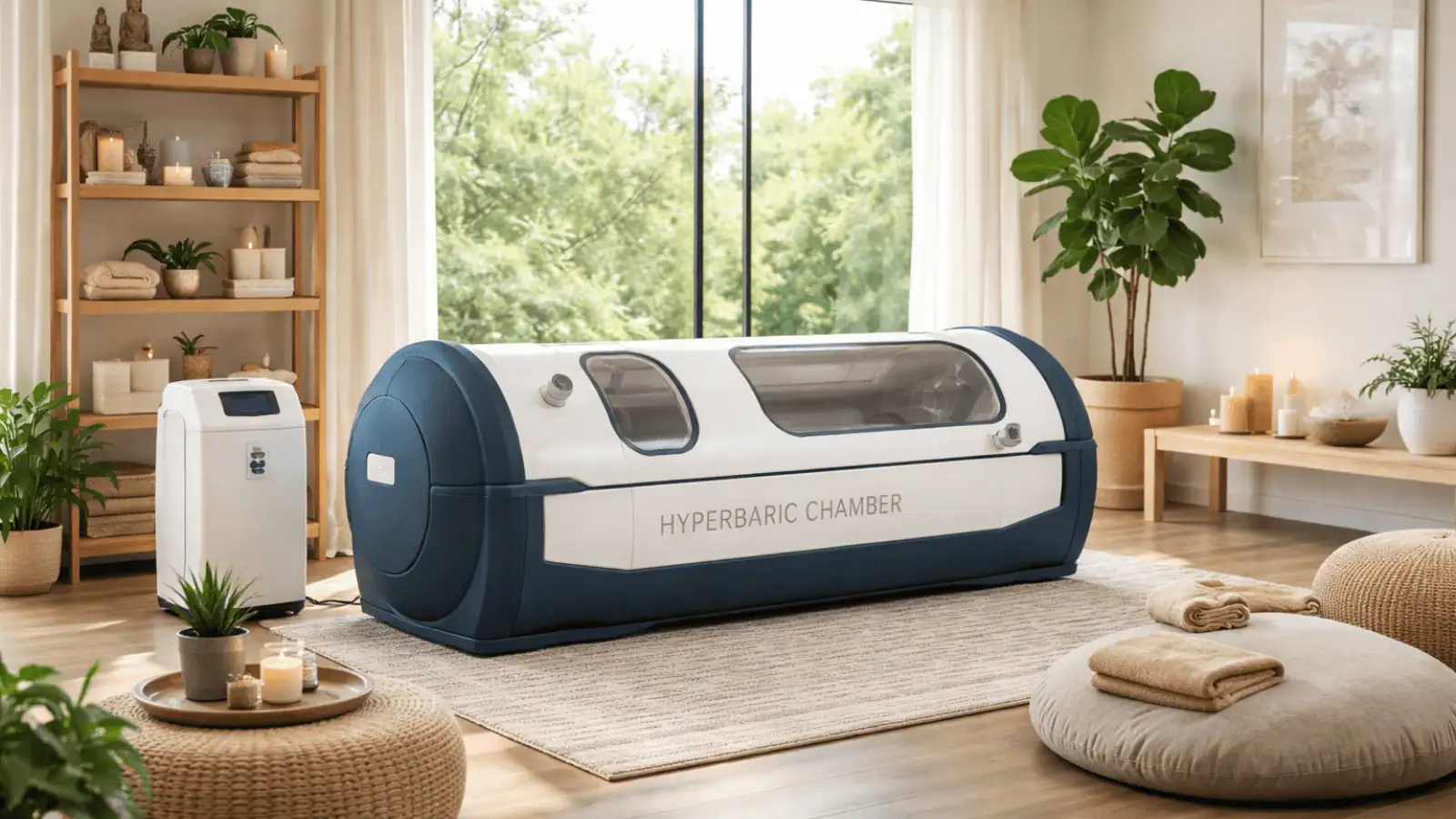
Placement matters too. A chamber tends to work best in a calm, low-clutter space where setup feels sustainable rather than inconvenient. If someone has to reorganize a room, move equipment, or treat each session like a major project, consistency usually fades. The more realistic approach is a dedicated recovery zone that fits daily life.
If you are thinking about chamber ownership rather than clinic-based use, our Hyperbaric Sage blog and device guides can help you compare how home-friendly different chamber styles may be.
What results are realistic and what results are oversold
A realistic expectation is that HBOT may support recovery quality over time in the right context. That might show up as smoother rehab progression, improved readiness after physically stressful periods, or better support for tissue repair processes. It may also simply help some people feel more intentional about recovery because they are using the chamber consistently within a structured routine.
An unrealistic expectation is that one or two sessions will erase soreness, dramatically speed muscle growth, or make recovery effortless. Cleveland Clinic specifically warns that HBOT is sometimes promoted for unapproved uses without enough research to conclude that it safely and effectively treats those conditions. That is especially important in sports and wellness marketing, where performance language can outrun the evidence.
The healthiest approach is to evaluate HBOT the same way you would evaluate any higher-end recovery tool: by asking whether it fits your goals, your budget, your space, and your medical context—not by assuming that more advanced always means more effective.
Need the bigger wellness picture first?
Start with our science-focused overview of hyperbaric oxygen therapy benefits →
Safety considerations before using HBOT for recovery goals
Even when people approach HBOT for a non-emergency goal like recovery support, it is still a medical technology environment—not just a casual wellness gadget. Cleveland Clinic notes that sessions often last one to two hours and that side effects can include ear discomfort, sinus pressure, claustrophobia, temporary vision changes after repeated sessions, and rare oxygen-toxicity-related complications. Their guidance also notes that some people should not undergo HBOT, including those with certain lung issues or an untreated pneumothorax.
That is why recovery-focused users should still think in terms of screening, fit, and supervision. If you have respiratory concerns, ear issues, implanted devices, recent surgery, or other medical variables, a qualified medical professional should help determine whether HBOT makes sense for you. This topic becomes even more important for older adults, high-volume athletes, or anyone managing multiple health conditions while also training hard.
For broader precautions and screening considerations, read How to Use Hyperbaric Oxygen Therapy Safely.
When HBOT may be worth exploring and when it may not be
HBOT may be worth exploring when muscle recovery is part of a bigger performance or healing picture and someone values a structured, long-term approach. It may also be more defensible when used alongside rehab, clinician oversight, or a known tissue-recovery bottleneck rather than casual curiosity alone.
It may not be worth it for someone whose main issue is ordinary soreness, inconsistent training habits, or weak recovery basics. In those situations, sleep, better programming, nutrition, and lower-cost modalities often deserve attention first. HBOT is a higher-commitment option, so it should earn its place.
A helpful rule of thumb is this: the more specific and demanding your recovery context, the more reasonable it is to evaluate HBOT seriously. The more general and lifestyle-based your goal is, the more important it becomes to keep expectations measured.
A practical decision framework for readers considering HBOT
Before investing time or money into HBOT for muscle recovery, ask yourself a few grounded questions:
- Am I trying to recover from meaningful tissue stress, or just normal soreness?
- Have I already addressed sleep, programming, nutrition, hydration, and rest?
- Do I need medical guidance because of injuries, symptoms, or health history?
- Would clinic-based sessions or home use make more sense for my schedule?
- Am I evaluating HBOT as one tool in a full system rather than a cure-all?

If your answers point toward a structured recovery need, HBOT may deserve a closer look. If not, it may be smarter to refine the basics first and revisit advanced modalities later.
Frequently asked questions about hyperbaric oxygen therapy for muscle recovery
Can HBOT help after hard training?
It may support recovery after hard training, especially when there is more meaningful tissue stress involved, but the best current evidence does not show a clear benefit for ordinary exercise soreness alone.
Is HBOT mainly for athletes?
No. Athletes are one group interested in it, but HBOT is a medical therapy with established clinical uses that extend far beyond sports. Recovery-focused use should still be approached carefully and conservatively.
Will a few sessions noticeably speed recovery?
Some people may notice subjective differences, but HBOT should not be framed as an instant fix. Consistency, context, and the underlying reason for using it all matter.
Is it safe to use at home?
Home use may be practical for some people, but safety screening still matters. Chamber choice, health history, pressure protocols, and appropriate instruction all affect whether home use is a good fit.
Final thoughts on Hyperbaric Oxygen Therapy for Muscle Recovery
Hyperbaric Oxygen Therapy for Muscle Recovery is best understood as a potentially useful support tool, not a shortcut. The mechanism makes sense: more oxygen under pressure may help support repair processes, circulation dynamics, and tissue recovery. But the evidence is more convincing for exercise-related muscle injury than for standard soreness, and that distinction should guide expectations.
For readers who are serious about recovery, the smartest approach is to treat HBOT as one part of a layered plan. Use it alongside sleep, smart training, nutrition, rest, and medical guidance when appropriate. That mindset keeps the conversation evidence-aligned and avoids the inflated promises that often surround higher-end wellness technologies.
Ready to compare next steps?
Browse our chamber comparisons in the 2026 buyer’s guide, explore more articles in the HBOT blog, or contact Hyperbaric Sage with editorial questions.
Medical sources referenced in this article: Mayo Clinic overview of hyperbaric oxygen therapy, Cleveland Clinic HBOT overview, 2025 systematic review and meta-analysis on exercise-induced muscle injury and soreness, and review on early recovery of exercise-related muscular injury.