OxyHealth Vitaeris 320 Review
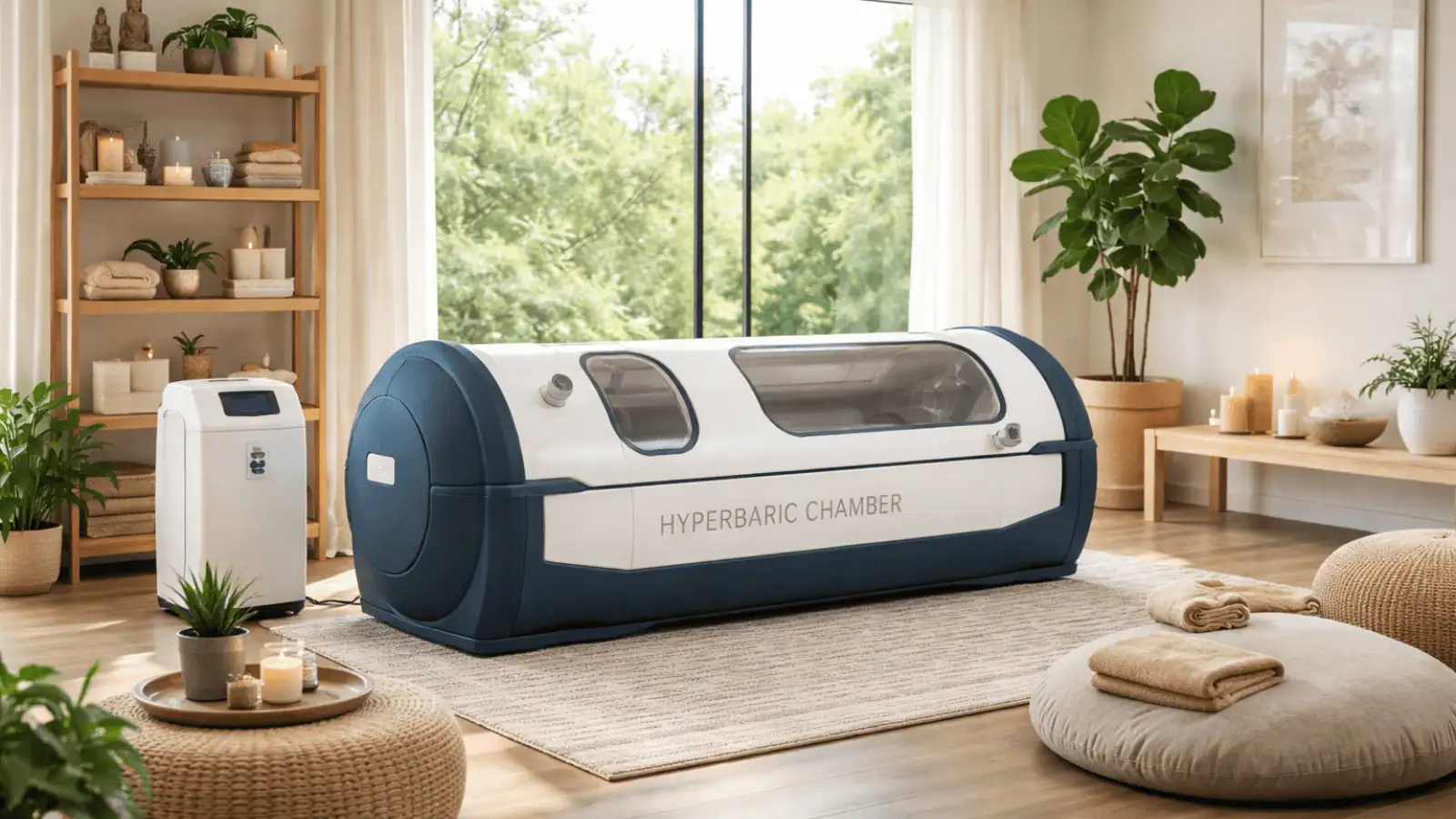
The OxyHealth Vitaeris 320 is one of the better-known names in the mild hyperbaric chamber category, and for good reason. It is positioned as a roomy, home-friendly chamber designed for users who want a more comfortable soft-sided setup than entry-level units usually provide. In practical terms, this review is less about hype and more about whether the Vitaeris 320 makes sense for someone building a realistic home HBOT routine around comfort, consistency, and manageable setup.
As a mild chamber, the Vitaeris 320 operates at a lower pressure level than hard-shell clinical systems. That matters because buyers often confuse “hyperbaric” as one single category when, in reality, home soft-sided units and higher-pressure medical systems serve different use cases. Medical HBOT is commonly discussed in clinical settings as a treatment delivered under elevated pressure with oxygen support, while home users are usually evaluating portability, comfort, maintenance, and repeatability just as much as they are evaluating pressure numbers. Mayo Clinic’s overview of hyperbaric oxygen therapy is a useful starting point for understanding that broader context, especially the role of pressurized oxygen environments in increasing oxygen delivery to the body. Mayo Clinic explains HBOT here.
In this review, we will look at how the Vitaeris 320 fits into a home wellness setup, what its size and design mean in day-to-day use, where it stands relative to other mild and soft-sided chambers, and who is most likely to feel that the extra space and brand reputation justify the investment. If you want a broader market view first, see our best hyperbaric oxygen chambers buyer’s guide.
Start with the full comparison
If you are still comparing chamber categories, sizes, and home-use tradeoffs, review our full hyperbaric chamber buyer’s guide →
What the OxyHealth Vitaeris 320 is designed to do
OxyHealth describes the Vitaeris 320 as a flagship portable hyperbaric chamber in its lineup, built around a 1.3 ATA operating pressure, a spacious interior, and a comfort-forward design for home or clinic-style use. On the official product page, the company emphasizes its roomy profile, user-friendly layout, and safety features such as dual pressure relief valves and an internal pressure gauge. You can view the manufacturer’s Vitaeris 320 product details here.
That positioning gives a good clue about where this chamber sits in the market. It is not trying to be the cheapest way into mild HBOT. It is also not pretending to replace higher-pressure clinical systems. Instead, it targets buyers who want a soft chamber with a more premium sense of space and a more established brand profile. For many home users, that category has real appeal because comfort and ease of repeat use often determine whether the chamber becomes part of a consistent routine or ends up underused.
The Vitaeris 320 is therefore best understood as a mild, portable, soft-sided system meant for people who care about usable interior width, a more refined fit and finish, and a product identity that feels a step above generic portable units. That does not automatically make it the right chamber for every buyer, but it does help frame the decision more accurately.
The core specifications that matter in real-world use
Spec sheets only become useful when translated into actual living-room, home-gym, or recovery-room realities. The Vitaeris 320 is commonly listed at 1.3 ATA, with an inflated diameter of roughly 32 inches and a length of about 92 inches. Those dimensions matter because they directly affect whether the chamber feels merely “usable” or genuinely comfortable for longer sessions. A few extra inches in diameter can make a major difference for larger-bodied users, taller users, or anyone who dislikes the confined feeling common in narrow chambers.
That wider interior is one of the Vitaeris 320’s biggest selling points. It can make entry, repositioning, and general in-session comfort easier than what many people experience with tighter soft-sided designs. If the main concern is feeling cramped, this model has a clear advantage over smaller-profile units. It also makes the chamber more realistic for users who want to read, rest, or spend consistent time inside without feeling overly boxed in.
From a buying standpoint, the chamber’s size cuts both ways. More space usually means more comfort, but it also means more physical footprint in the room, more visual presence in the home, and more thought required around where the unit will live. Someone in a compact apartment may see the size as a drawback, while someone with a dedicated recovery room may see it as exactly what justifies choosing this model over slimmer alternatives.

Comfort, entry, and overall user experience
For many buyers, the Vitaeris 320’s strongest argument is not a pressure number but the comfort profile. Mild HBOT is often framed as a technical decision, yet real-world ownership usually comes down to simpler questions: Does it feel manageable to get into? Can you relax once inside? Does the chamber feel like something you will actually use several times a week?
This is where the Vitaeris 320 tends to stand out. A chamber that feels less restrictive can reduce psychological resistance to starting a session. That matters for users who are new to enclosed wellness equipment, those who are mildly claustrophobic, or families purchasing a chamber with multiple household users in mind. Spaciousness is not just a luxury feature. It is often a compliance feature, because it makes routine use easier.
The model’s comfort-forward design is especially relevant for longer or repeated home sessions. If your goal is to integrate HBOT into a broader routine that may include post-workout recovery, remote-work breaks, or evening relaxation time, the chamber’s livability matters more than marketing language. In that respect, the Vitaeris 320 appears well positioned for users who place a premium on session comfort and who want their setup to feel stable and familiar over time rather than improvised.
How the Vitaeris 320 fits into a home environment
The best home hyperbaric chamber is not always the most advanced one. It is often the one that fits the room, the household, and the user’s routine without creating too much friction. The Vitaeris 320 is best suited to buyers who can dedicate a real slice of space to recovery or wellness use. That may be a home office corner, a gym-adjacent area, a finished basement, or a spare room that functions as a wellness zone.
Because this is a larger soft-sided model, home placement should be considered before purchase. It is better matched to buyers who want a semi-permanent setup than people expecting a truly minimal footprint. The visual footprint can be worth it if the chamber becomes part of a daily or near-daily rhythm, but it is less attractive for casual users who want something tucked out of sight after each use.
In practical terms, the Vitaeris 320 works well for users who want a “destination” recovery setup at home. It feels less like a compact accessory and more like a dedicated piece of wellness equipment. That can be a strength if the room supports it. If not, the extra comfort may not compensate for the added space demands.

Where a 1.3 ATA chamber fits in the broader HBOT landscape
One of the most important parts of any chamber review is expectation setting. The Vitaeris 320 is a mild chamber, and that means buyers should evaluate it within the mild HBOT category rather than against higher-pressure clinical systems. Cleveland Clinic’s overview of hyperbaric oxygen therapy describes HBOT as treatment in a pressurized chamber that increases oxygen delivery, but the medical and clinical context of hospital-based treatment is different from what most people are evaluating in the home market. Cleveland Clinic’s HBOT overview provides helpful medical background.
That distinction matters because unrealistic comparisons can distort the purchase decision. A home mild chamber like the Vitaeris 320 is usually chosen for accessibility, comfort, ease of integration, and household use potential. A hard-shell medical system is a different category altogether in cost, infrastructure, and intended use. The Vitaeris 320 should therefore be judged against other mild and soft-sided units, especially on comfort, fit, build confidence, and routine usability.
For buyers who already know they want the home soft-sided category, the Vitaeris 320 fits the “premium mild chamber” lane fairly well. For buyers still undecided between mild and hard-shell systems, this review should not be read as proof that all chamber categories are equivalent. They are not. They serve different needs and buyer expectations.
Safety and construction considerations buyers should notice
Soft-sided chamber buyers should pay close attention to practical safety-oriented design elements, not just headline claims. OxyHealth highlights features such as dual pressure relief valves, engineered window slits, internal pressure monitoring, and a design intended for controlled operation. Those are useful signals because mild chamber ownership is partly about confidence in repeated at-home use, especially when the buyer values a more established manufacturer profile.
That said, every chamber category still requires careful setup, proper operation, and realistic expectations. Hyperbaric environments are not casual consumer gadgets. NIH resources describing hyperbaric physiology note that increased pressure and oxygen conditions create distinct physiological effects, which is one reason proper operational discipline matters. The NIH StatPearls overview on hyperbaric physiological effects offers useful background.
From a buyer perspective, the Vitaeris 320 looks strongest when purchased by someone who wants a chamber from a recognized brand, values visible safety features, and is willing to follow setup and use instructions carefully. It looks weaker for someone shopping mostly on price, where lower-cost chambers may appear more appealing even if they do not inspire the same confidence.

Who the Vitaeris 320 is best for
The Vitaeris 320 is best for the buyer who already knows three things: first, they want a mild chamber rather than a hard-shell system; second, they care a lot about interior comfort; and third, they have enough home space to support a larger soft-sided unit without constant compromise. That combination makes the chamber particularly appealing for wellness-focused households, dedicated recovery spaces, and users who expect to build a repeatable routine rather than experiment casually.
It may also be a good fit for users who strongly dislike cramped equipment. If the idea of a narrow chamber is the biggest barrier to consistent use, the Vitaeris 320’s wider profile becomes more than a comfort perk. It becomes one of the main reasons to choose it. Likewise, users who want a chamber that feels more premium and less generic may appreciate the established positioning of the OxyHealth brand.
For comparison shopping across this category, our best mild hyperbaric chambers guide and best soft-sided hyperbaric chambers roundup can help place the Vitaeris 320 in a broader shortlist.
Who may want to skip this model
The Vitaeris 320 will not be the right choice for everyone. If your main priority is minimizing cost, a more budget-oriented chamber will likely look more attractive, even if it gives up some interior spaciousness and premium positioning. If your home space is tight, the larger footprint may be more annoying than beneficial. And if your long-term goal is a higher-pressure, more clinical-style experience, then buying a large mild chamber may simply delay the decision you already know you want to make.
This model may also be more chamber than some people need. If a buyer is relatively small-framed, comfortable in compact spaces, and focused almost entirely on keeping the setup affordable and modest, then the Vitaeris 320’s comfort advantage may not deliver enough added value. In those cases, the extra size can feel like an expensive convenience rather than a decisive upgrade.
Buyers comparing categories rather than brands may also want to review our budget hyperbaric chamber roundup or the broader 2026 chamber buyer’s guide before committing to a premium mild model.
How the Vitaeris 320 compares in decision-making terms
When buyers compare chambers, they often focus too much on whether one model is “better” in the abstract. A more useful framing is to ask what tradeoff each model is making. The Vitaeris 320 appears to trade a larger footprint and likely higher spend for better interior comfort, stronger perceived usability, and a more premium ownership feel.
That means its comparative strength is not necessarily raw novelty. It is refinement within the mild soft-sided category. A smaller chamber may win on space efficiency. A cheaper chamber may win on entry cost. A hard-shell system may win on a different kind of pressure environment. But the Vitaeris 320’s case is that it makes at-home mild HBOT feel more livable and less restrictive.
That is a meaningful differentiator because many chamber purchases fail in practice not because the equipment is technically inadequate, but because the ownership experience becomes inconvenient. A model that encourages repeat use through comfort and familiarity can have more real-world value than a spec advantage that never translates into routine use.

Practical ownership questions to ask before buying
Before choosing the Vitaeris 320, buyers should work through a few practical questions. Do you have enough room for a larger chamber and its accessories without turning your space into a storage puzzle? Do you expect to use it regularly enough that added comfort will truly matter? Will multiple people in the household use it, making the extra room more worthwhile? Are you specifically committed to the mild soft-sided category, or are you still undecided between home mild use and more clinical-style systems?
These questions matter because the Vitaeris 320 is a model that makes the most sense when it is chosen intentionally. It is not a “just get something” purchase. It is a “I know what I want from the mild category” purchase. Buyers who answer those questions clearly are more likely to feel satisfied with the chamber over time.
If you are still sorting out those fundamentals, it may be smarter to step back and review our educational resources on hyperbaric oxygen therapy benefits, the Hyperbaric Sage blog, and our guide to what hyperbaric oxygen therapy is before making a chamber-specific decision.
Frequently asked questions about the OxyHealth Vitaeris 320
Is the OxyHealth Vitaeris 320 a hard-shell chamber?
No. The Vitaeris 320 is positioned as a portable, soft-sided mild hyperbaric chamber rather than a hard-shell clinical system. It should be compared primarily with other mild home-use chambers, not with higher-pressure medical units.
What is the main advantage of the Vitaeris 320?
The biggest advantage appears to be its spacious interior relative to many soft-sided alternatives. For buyers who care about comfort, reduced cramped feeling, and a more premium home-use experience, that extra room is a major selling point.
Who is the Vitaeris 320 best suited for?
It is best suited for home users who want a mild chamber, have enough room for a larger setup, and value comfort highly enough to pay for it. It is especially appealing for dedicated wellness or recovery spaces where the chamber can remain part of a stable routine.
Final verdict on the OxyHealth Vitaeris 320
The OxyHealth Vitaeris 320 is a strong option for the buyer who wants a spacious, comfort-oriented mild hyperbaric chamber from a recognized manufacturer and who has the home space to support it properly. Its best case is straightforward: if you already know you want a soft-sided mild chamber and you consider interior comfort a top priority, the Vitaeris 320 makes a compelling case.
Its weakest case is also clear. Buyers focused mainly on lowest price, smallest footprint, or a different chamber category may find better fits elsewhere. The Vitaeris 320 is not the universal answer. It is a category-specific answer for a buyer who values livability, roominess, and a more polished ownership experience.
For broader comparisons, continue with our buyer’s guide, compare it against other soft-sided chambers, or reach out through our contact page if you want help narrowing down the right chamber category for your space and goals.
Compare before you commit
See how the Vitaeris 320 stacks up against other home chamber categories in our full buyer’s guide →