Summit to Sea Grand Dive Pro Review
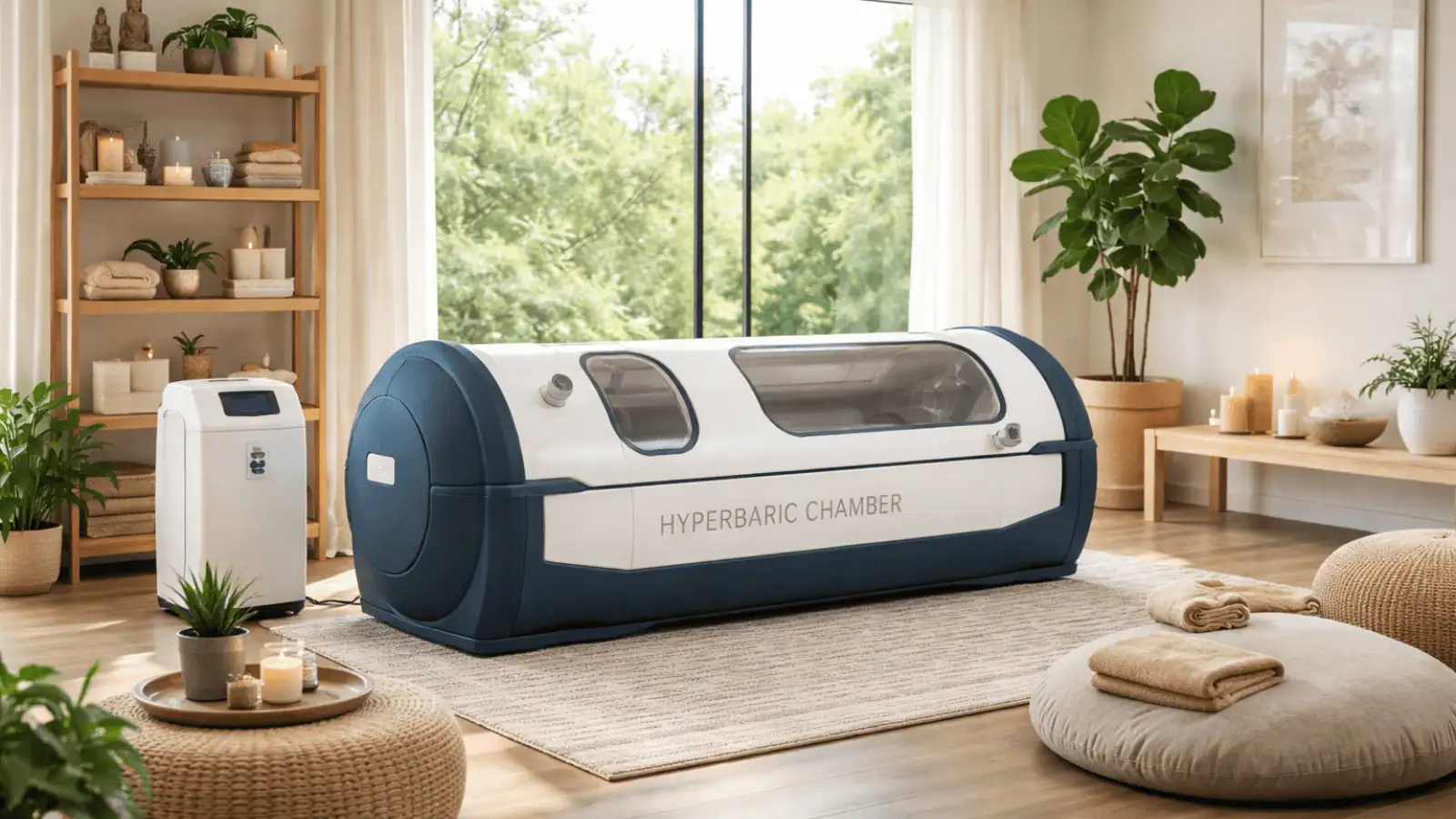
The Summit to Sea Grand Dive Pro review is best approached as an evaluation of space, access, and everyday practicality rather than hype. This is a large mild hyperbaric chamber built for buyers who want more interior room than entry-level models usually offer. In the Summit to Sea lineup, the Grand Dive Pro sits above the standard Grand Dive and is positioned more like a premium large-format soft-sided option for homes, recovery spaces, and certain clinic-style environments.
From an editorial standpoint, the Grand Dive Pro stands out because of its 46-inch diameter, large end-entry opening, circumferential zipper design, and roomy interior. Those details matter more than marketing language. They shape who this chamber may work for, where it may fit in a home, and whether the ownership experience feels practical over months of use instead of only impressive on day one.
If you are still comparing categories, start with our Best Hyperbaric Oxygen Chambers (2026 Buyer’s Guide). If you already know you want a flexible soft-sided format, our Best Soft-Sided Hyperbaric Chambers roundup is the closest comparison set for this model.
Compare Before You Commit
If you are still deciding between chamber sizes and formats, see our full hyperbaric chamber buyer’s guide →
What the Summit to Sea Grand Dive Pro is designed to be
The Grand Dive Pro is a large mild hyperbaric chamber rather than a hard-shell clinical unit. Summit to Sea describes it as a spacious model with a 46-inch diameter, an 8-foot length, a large entrance, and operation up to 1.3 ATA / 4.4 PSI. That places it in the category many home buyers look at when they want more comfort and more usable space without stepping into the cost, footprint, and infrastructure demands of larger hard-shell systems.
What makes this model different from smaller mild chambers is not just the added width. It is the combination of width, end-entry access, frame support, and a design that appears intended to reduce the “tight tunnel” feeling some buyers worry about. The brand also positions it as suitable for scenarios where easier access matters, including setups that may involve a stretcher-style approach, though buyers should verify their exact accessory needs and intended use directly with the manufacturer.
In practical terms, the Grand Dive Pro is not the right chamber for someone shopping on minimum budget or trying to tuck a unit into a spare corner with almost no planning. It is a chamber for buyers who already know they value interior space, ease of entry, and a more premium ownership experience.
How this chamber may fit into real home or clinic-style use

One of the most important parts of any review is understanding whether a chamber makes sense in everyday life. The Grand Dive Pro may be a strong fit for buyers who are creating a dedicated recovery room, wellness suite, larger home gym recovery corner, or a semi-professional setup where the chamber is expected to feel accessible instead of cramped.
Because this is a larger soft-sided model, placement matters. You are not only planning for the listed chamber dimensions. You are also planning for entry clearance, frame placement, airflow, accessories, electrical considerations, and the experience of walking around it comfortably. In many homes, this means the chamber may fit best in:
- a finished basement with open floor space
- a larger bonus room or wellness room
- a garage conversion or dedicated recovery area
- a performance-focused home gym setup
That extra space can be a real advantage. A large chamber may feel easier to use consistently because the process of getting in and out feels less intimidating. At the same time, the larger footprint means it may be too ambitious for buyers with limited square footage, shared rooms, or a desire for a highly portable setup they can frequently move.
Why the size and mild-pressure format are the main story

The Grand Dive Pro appears to operate at a mild hyperbaric level of up to 1.3 ATA / 4.4 PSI. That matters because it defines both expectations and tradeoffs. Mild chambers are generally appealing to home users because they may be easier to integrate into everyday routines than more demanding hard-shell systems, but they also should not be framed as interchangeable with higher-pressure medical settings. Conservative expectations are important here.
From an educational standpoint, hyperbaric oxygen exposure is being studied for how increased pressure may support oxygen delivery in plasma and downstream recovery-related processes. Broad overviews from sources like Cleveland Clinic and StatPearls via NCBI Bookshelf help explain the basics, while research listings on PubMed show where HBOT continues to be studied. For a buyer, though, the key question is simpler: does this chamber’s format match your goals, your space, and your comfort level?
With the Grand Dive Pro, the answer may be yes if your priority is a roomy mild chamber that feels less restrictive than compact entry-level units. The answer may be no if you are specifically looking for the smallest footprint, the lowest cost, or a travel-friendly chamber you can pack away without much effort.
Entry design, comfort, and day-to-day usability
The most persuasive part of the Grand Dive Pro on paper is its access design. Summit to Sea highlights a large end-entry opening with double-sided circumferential zippers, and that is the feature that most clearly separates this chamber from smaller, more restrictive-feeling options. For many buyers, the biggest ownership issue is not pressure rating or branding. It is whether the chamber feels easy enough to use repeatedly.
That is why access design matters so much. A larger opening may help buyers who care about easier ingress and egress, less awkward positioning, and a generally more approachable experience. The chamber also appears to include large viewing windows, a foam-contoured mat, a frame, carrying case support, and redundant compressors. All of that points toward a model built to feel like a step up in usability rather than just a bigger tube.
Comfort also includes psychological comfort. Large viewing areas and a brighter interior may reduce the sense of confinement some people worry about with enclosed recovery equipment. That does not mean everyone will feel the same way, but it does make the Grand Dive Pro look better suited to comfort-focused buyers than ultra-compact designs.
Who the Grand Dive Pro may be best for

In our view, the Grand Dive Pro makes the most sense for a specific type of buyer. It is not the universal best chamber for everyone. It is best understood as a premium large mild chamber for users who prioritize roominess and access over minimalism.
It may be a strong fit for:
- buyers who feel cramped by smaller mild chamber dimensions
- households building a dedicated home recovery room
- athletes or performance-focused users who want a more premium-feeling setup
- wellness-minded families who value a brighter, more spacious interior
- buyers comparing large soft-sided chambers before considering hard-shell systems
It may be less ideal for:
- apartment dwellers or buyers with tight floorplans
- people who want an entry-level price point
- shoppers prioritizing maximum portability
- buyers who only need a solo chamber and do not value extra width
That distinction is important. A chamber can be “better” in raw size and comfort yet still be the wrong purchase if your living situation, storage needs, or budget suggest a smaller format would be used more consistently.
How it compares to smaller soft-sided options and bigger systems
The Grand Dive Pro occupies an interesting middle ground. Compared with smaller soft-sided models, it offers more interior room, easier access, and a more premium positioning. Compared with very large professional systems or hard-shell units, it remains part of the mild, flexible, home-friendlier end of the market.
That means its competitive pressure comes from two directions:
- Below it: smaller mild chambers that cost less and fit more homes
- Above it: larger specialty or more clinic-oriented systems that may offer even more access or capacity but at greater cost and complexity
This is why the Grand Dive Pro tends to appeal most to buyers who already know they do not want to “trade down” into a compact model. If you are already convinced that space, comfort, and easier entry are central to your purchase decision, this model becomes much easier to justify. If not, it may feel like overbuying.
For broader category context, you can compare this chamber against the rest of the field in our soft-sided chamber roundup and our full Hyperbaric Sage blog.
Practical ownership considerations before buying
Large chambers often look appealing in product listings, but ownership becomes easier when buyers think through the boring details upfront. Before purchasing a model like the Grand Dive Pro, it is smart to evaluate:
- Floor space: not just where the chamber sits, but where people walk, enter, and maintain it
- Electrical setup: the manufacturer notes operation on a standard 120V 15 AMP outlet, but buyers should confirm their exact setup
- Noise tolerance: compressors and air management matter in real homes, especially in shared spaces
- Routine fit: a chamber is more useful when the setup supports regular use rather than occasional novelty
- Access needs: this chamber’s larger opening may be one of its most compelling benefits for certain buyers
Another practical point: large chambers can feel more “worth it” when they live in a stable, permanent place. If you expect to move the unit often, collapse it repeatedly, or treat it like temporary equipment, a smaller format may create less friction over time.
Still comparing chamber styles?
Our side-by-side roundup of the best soft-sided hyperbaric chambers → can help you narrow the field faster.
What the ownership experience may feel like over time

Without implying personal use, this is the kind of chamber that appears most appealing when used as part of a consistent routine rather than as an occasional experiment. Its value proposition is tied to feeling spacious, stable, and easy enough to keep using. That can matter for households trying to build a repeatable wellness rhythm.
For example, a buyer may prefer using a larger chamber in the morning after light movement, in an evening wind-down routine, or in a dedicated recovery block after training. A chamber that feels less cramped may simply be easier to keep in rotation. That does not guarantee better outcomes, but it can improve adherence, which is often the practical difference between equipment that becomes part of life and equipment that becomes expensive furniture.
The flip side is equally important: if your routine is chaotic, your room is small, or you are highly price sensitive, a large premium soft-sided chamber may create more friction than benefit. The “best” chamber is often the one you can actually accommodate and use with consistency.
Main pros and tradeoffs in this Summit to Sea Grand Dive Pro review
What we like
- Large 46-inch diameter gives this model a more premium spacious feel
- End-entry design may be more approachable than tighter side-entry formats
- Soft-sided mild chamber format remains more home-friendly than hard-shell alternatives
- Viewing windows, frame support, and roomy interior suggest comfort is a priority
- Strong fit for buyers who specifically want a larger-capacity soft-sided chamber
What gives us pause
- The size advantage also means a larger footprint and more planning
- It is likely more than many solo home users actually need
- Buyers seeking portability or minimalism may find it excessive
- Mild pressure format should be understood realistically, not over-interpreted
- Price moves it out of “entry-level experiment” territory
Those tradeoffs are not flaws so much as category realities. The Grand Dive Pro looks strongest when evaluated as a chamber for buyers who intentionally want large-format mild-chamber comfort. It looks weaker when judged by compactness, affordability, or simplicity.
Who should buy it and who may want another direction

Buy it if you have the space, prefer a brighter and roomier chamber feel, care about easier access, and want a mild hyperbaric model that feels meaningfully upgraded from smaller home units.
Skip it if your main priorities are low cost, small footprint, or maximum portability. In that case, you may be happier with a simpler chamber that fits your room and routine with less compromise.
If you are uncertain, do not force the decision around prestige or size alone. Match the chamber to the room, the household, the user profile, and the routine. That usually leads to a better outcome than chasing the “largest possible” chamber by default.
Buyers who want help thinking through category fit can also review our educational pages on hyperbaric oxygen therapy benefits and contact Hyperbaric Sage if you want us to prioritize a comparison review next.
Final verdict on the Summit to Sea Grand Dive Pro
Our editorial takeaway is that the Grand Dive Pro looks like a strong option for buyers specifically shopping for a large, premium-feeling mild hyperbaric chamber. Its best selling points are not abstract. They are practical: more space, easier entry, a less restrictive interior feel, and a design that may suit dedicated home recovery rooms or higher-end wellness setups better than compact alternatives.
It is not the most universal chamber because its strengths are tied directly to size and setup demands. But for the right buyer, those same demands are exactly what make the chamber attractive. If your goal is comfort, access, and roominess in a soft-sided 1.3 ATA class model, the Grand Dive Pro deserves a serious look.
For buyers still deciding, it makes the most sense to compare this model against the top soft-sided alternatives rather than against the smallest budget units. That is where its strengths become clearest.
Conclusion: a compelling large-format soft-sided option for the right buyer
The Summit to Sea Grand Dive Pro is best viewed as a spacious, access-friendly mild chamber for buyers who know they want more than a compact entry model. It may not be the right fit for every home, but it stands out for interior room, end-entry usability, and a premium large-chamber feel that could make long-term ownership more comfortable.
If you want the broader market view, compare it against the rest of the category in our Buyer’s Guide. If you are already focused on flexible chamber formats, go next to Best Soft-Sided Hyperbaric Chambers. You can also browse more evaluations in the Hyperbaric Sage blog.