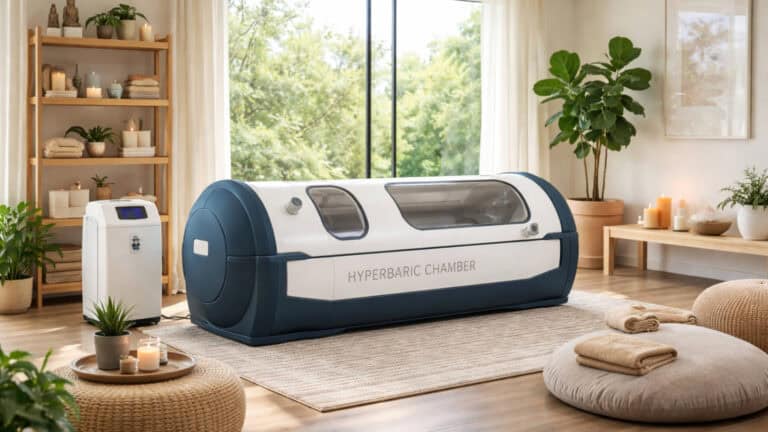
HBOT USA Elite Chamber Review
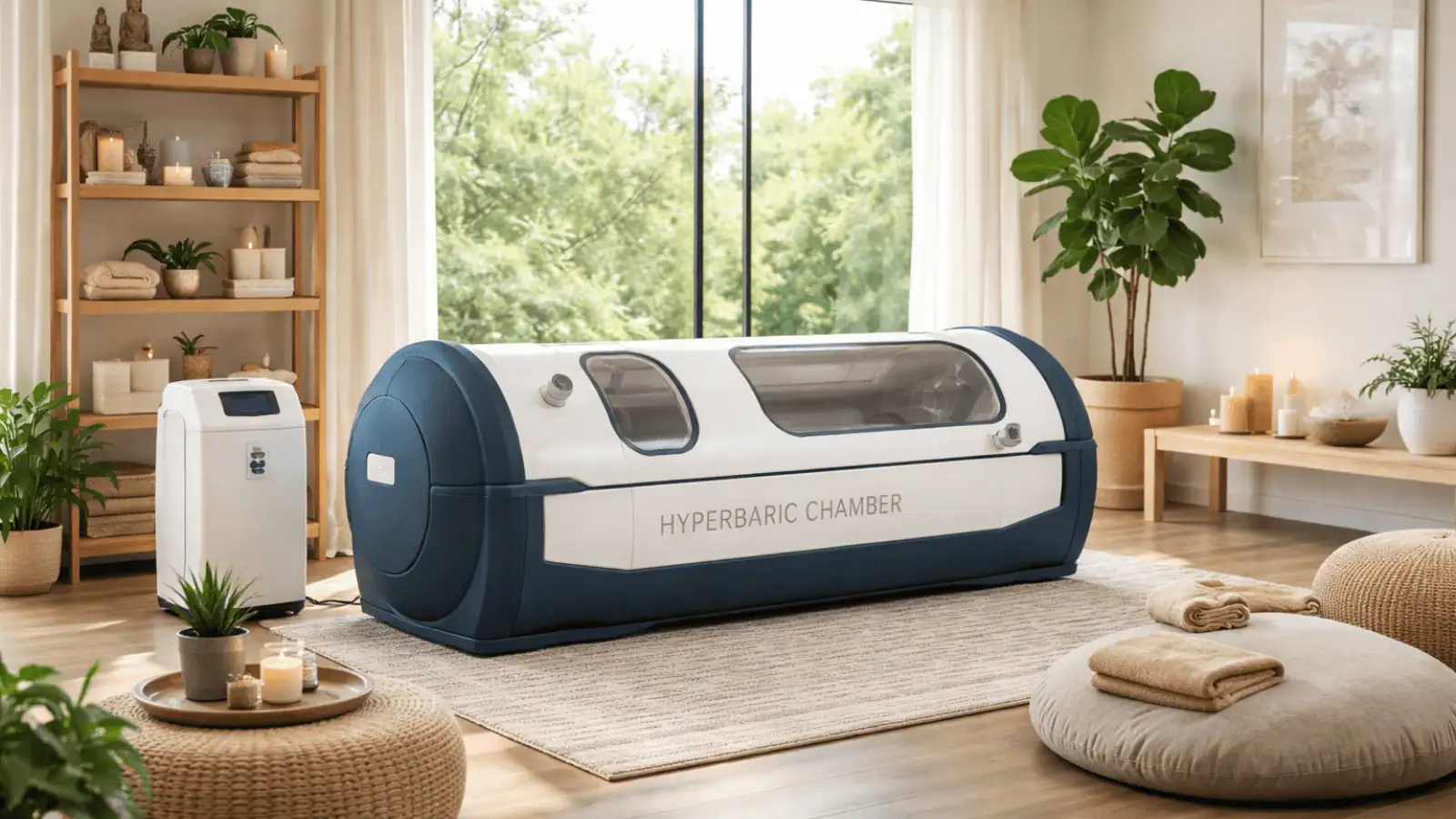
The HBOT USA Elite Chamber Review is best understood as a look at a premium portable chamber aimed at buyers who want more than a basic entry-level soft unit without immediately stepping into a full clinic-style hard shell. Public product information for the HBOT USA offering points to the Eclipse Elite portable chamber, marketed with multiple pressure options, onboard control features, internal and external gauges, and a strong emphasis on safety-oriented design details. Hyperbaric Chambers
That makes this chamber especially relevant for home users who care about routine consistency, space planning, day-to-day comfort, and the practical realities of owning a chamber instead of visiting a clinic. Hyperbaric oxygen therapy itself involves breathing oxygen in a pressurized environment, which can increase oxygen delivery compared with normal atmospheric conditions. Major medical sources also note that HBOT is used in clinical medicine under defined protocols, while broader wellness-oriented use should be approached conservatively and with appropriate professional guidance. Mayo Clinic
Compare the bigger picture
If you are still narrowing your options, start with our best hyperbaric oxygen chambers buyer’s guide → before deciding whether this style of chamber fits your home and routine.
What the HBOT USA Elite chamber appears to be
Based on the currently available product page, the HBOT USA Elite offering aligns with the Eclipse Elite portable hyperbaric chamber, a soft-sided two-person chamber promoted with 1.35 ATA, 1.5 ATA, and 2.0 ATA configurations. The same page describes a TPU chamber body, an internal steel frame, five large windows, oxygen delivery via face mask, and a side-entry design intended to make entry easier for users with mobility limitations. Hyperbaric Chambers
That combination places it in an interesting middle ground. It is still portable and home-oriented in spirit, but it is being positioned as more fully engineered than bargain soft chambers that focus mostly on price. The design language centers on environmental control, air handling, oxygen concentration, pressure visibility, and emergency exit pathways rather than on a stripped-down, minimalist setup. For shoppers, that usually signals a chamber being sold on control and confidence more than on portability alone. Hyperbaric Chambers
In real-world terms, this is not the kind of chamber most people buy casually. It is more likely to appeal to someone building a dedicated home recovery area, a wellness practitioner evaluating a home or office installation, or a motivated long-term user who wants the chamber to feel like a serious fixture rather than a temporary inflatable tool.
Why chamber design matters in hyperbaric oxygen therapy
HBOT works by increasing the amount of oxygen available to the body in a pressurized setting. Mayo Clinic explains that the treatment increases oxygen delivery by placing the body in an enclosed space with higher-than-normal pressure, and Cleveland Clinic similarly describes HBOT as breathing 100% oxygen in a specialized chamber. Mayo Clinic

From a buyer’s perspective, that means chamber design is not just about appearance. Pressure range, oxygen concentration support, airflow management, visibility, entry style, and emergency depressurization all affect how usable the chamber feels over time. The more frequently someone plans to use a chamber, the more these daily-friction details matter. A chamber can look compelling in photos yet still be a poor fit if setup feels awkward, heat builds up, noise is distracting, or entry and exit feel cumbersome.
Research-oriented medical literature also discusses HBOT in relation to tissue oxygenation, inflammatory signaling, and angiogenesis, but those mechanisms do not automatically mean every chamber or every use case is equivalent. The chamber category still shapes the user experience. That is why this review focuses less on sweeping wellness claims and more on the purchase question: does this chamber appear well suited for consistent home use compared with other soft-sided options? NCBI
Specs snapshot and what stands out on paper
The published Eclipse Elite specs list dimensions of 225 cm by 90 cm, approximate chamber weight of 13 kg, TPU material with heat-welded joins, pressure options of 1.3/1.35 ATA, 1.5 ATA, and 2.0 ATA, dual compressors, 110 L/min airflow, 550W power, 50 dB noise, and oxygen concentration in the 90% to 97% range with 5 L/min flow in the spec block. Elsewhere on the same product page, the brand also states the unit can deliver oxygen at up to 10 L/min depending on model and references onboard control of oxygen flow and saturation. Hyperbaric Chambers
The first thing that stands out is the attempt to separate this chamber from very basic soft-sided units. You are not just seeing “inflatable chamber plus compressor.” You are seeing claims about onboard CPU controls, dehumidification, carbon dioxide removal, and multiple emergency valves. Even if a buyer treats some marketing language with caution, the general positioning is clear: this is supposed to feel like a more feature-rich system.
The second notable point is the pressure range. Many mild home chambers cluster around the lower end of the category, while this product is presented with higher-pressure options as part of its value proposition. That will matter to buyers who are specifically trying to avoid the lowest-powered segment of the home chamber market. At the same time, the practical question is not simply “higher is better.” It is whether the total system, support, comfort, safety logic, and routine fit justify the added complexity and price level that usually come with a chamber marketed this way.
Comfort and daily-use fit

One of the more practical details on the product page is the shift from top entry to side entry. That matters more than it may seem. For a frequent user, small ergonomic improvements can be the difference between a chamber that becomes part of a routine and one that ends up underused. If entry feels awkward, especially for older users, injured athletes, or larger-bodied buyers, compliance tends to fall off.
The company also emphasizes a redesigned viewing window layout intended to bring more light into the chamber. That is another worthwhile comfort feature. Soft-sided chambers can feel confining, especially for first-time users or anyone sensitive to enclosed environments. More visible space, more light, and clearer sightlines often matter just as much as technical specs when you are evaluating a chamber for long sessions several times per week. Hyperbaric Chambers
From a home-use angle, this chamber looks better suited to a dedicated recovery corner than a cramped spare closet. Even though it is marketed as portable, the more realistic use case is a semi-permanent setup where the chamber, operating unit, and routine accessories can stay in place. Buyers who want something they can constantly set up, take down, and tuck away may find that the premium feel of a system like this works against pure convenience.
Safety framing and where this model puts its emphasis
Safety is the product page’s central sales argument. The chamber is promoted with internal and external gauges, three emergency release pathways, natural airflow language in the event of power interruption, humidity management, and a regenerative carbon dioxide removal system. The brand also repeatedly presents these elements as major differentiators from lower-end portable competitors. Hyperbaric Chambers
That does not mean every marketing superlative should be accepted uncritically. But it does mean the manufacturer understands what sophisticated buyers worry about: oxygen purity, carbon dioxide buildup, emergency exit, heat, humidity, and system oversight during use. Those are legitimate decision points. In home hyperbaric buying, confidence often comes less from one headline spec and more from the sense that the whole operating environment has been thought through.
Medical sources also remind users that hyperbaric treatment is not trivial. Cleveland Clinic lists potential side effects such as ear discomfort, sinus pressure, and claustrophobia, while Mayo Clinic frames HBOT as a treatment that should be used under appropriate supervision and for appropriate indications. That is important context for anyone shopping a home chamber with an overly casual mindset. Mayo Clinic
Who this chamber may fit best

This appears to be a strong fit for three types of buyers.
1. The committed home routine buyer
If someone wants a chamber that feels substantial and is planning to build HBOT into a long-term weekly rhythm, the Elite-style positioning makes sense. The added comfort, side entry, control language, and safety emphasis all line up with that buyer profile.
2. The recovery-focused athlete or active adult
People creating a home recovery stack around training, mobility work, and general performance support may appreciate that the chamber is marketed as more than a budget soft shell. Research discussions around HBOT frequently touch on tissue oxygenation, inflammation modulation, and recovery pathways, even though the exact benefit profile depends heavily on protocol and context. PubMed
3. The wellness practitioner evaluating a serious home or office setup
A practitioner or advanced consumer may prefer a chamber that appears to bridge the gap between portability and a more engineered treatment environment. The two-person positioning may also matter here, because it suggests a roomier footprint than compact single-user tubes.
By contrast, this may be less ideal for bargain-first shoppers, frequent movers, or users who mainly want the lightest possible chamber for occasional experimentation.
Where the HBOT USA Elite chamber may not be the best fit
The likely drawback is that a chamber like this can become a bit of an “in-between” product. It is more involved and probably more expensive than stripped-down mild options, yet it still remains a portable soft-style chamber rather than a true clinical hard-shell environment. Some buyers may prefer to stay simpler and cheaper, while others may decide that if they are already spending heavily, they would rather jump to a different chamber class entirely.
There is also the issue of marketing intensity. The product page uses strong differentiator language and bold comparative claims. That is not unusual in this category, but it does mean careful buyers should separate what is clearly documented from what is more rhetorical. The real value case should be built on the visible specs, the physical design choices, the support model, and how well the chamber fits your planned use.
Compare similar options
If you are deciding between chamber styles, review our best soft-sided hyperbaric chambers roundup → to see where portable models like this sit in the broader market.
How it compares conceptually with other home chamber categories
Compared with entry-level mild chambers, the Elite seems to compete on engineering confidence, interior feel, and system oversight. Compared with more clinical hard-shell categories, it competes on home practicality and lower lifestyle friction. That is the lane this chamber appears to occupy.
For some buyers, that middle lane is exactly the point. They want something more serious than a low-cost inflatable chamber but still compatible with a home environment. For others, it can feel like compromise. If your main priority is simple access and lower spend, a more basic mild chamber may be enough. If your priority is maximum institutional-style structure, a portable chamber may never fully satisfy you, no matter how refined it becomes.
This is why the best question is not “Is the HBOT USA Elite good?” but rather “Is this the right chamber type for the way I plan to use HBOT?” That framing leads to better decisions than chasing whichever product page sounds most advanced.
Practical ownership considerations before buying

Before choosing a chamber like this, think through four practical issues:
- Space: The footprint and surrounding access area need to work in a real room, not just on paper.
- Routine: The best chamber is the one you will realistically use consistently.
- Noise and environment: Compressors, airflow, and room placement affect comfort over time.
- Support: After-sales guidance matters when you are buying a more technical home wellness system. The product page highlights lifetime support and warranty, which is a meaningful consideration if delivered well in practice. Hyperbaric Chambers
It is also wise to review broader educational content before buying. Our hyperbaric oxygen therapy benefits guide and Hyperbaric Sage blog can help you frame the difference between mechanism-based interest and real-world purchase readiness.
Our verdict on the HBOT USA Elite chamber
The HBOT USA Elite chamber looks most compelling for buyers who want a premium portable home chamber with more visible engineering attention than the lowest tier of soft-sided competitors. The published combination of multiple pressure options, side entry, wider light exposure, onboard control language, emergency release design, and carbon dioxide management gives it a stronger decision case than a generic “portable chamber” listing. Hyperbaric Chambers
Its biggest strength is not that it promises magical outcomes. Its biggest strength is that it tries to solve the everyday ownership issues that make or break long-term use: comfort, visibility, entry, environmental control, and confidence. That matters.
Its biggest limitation is that it still sits in a category where shoppers must balance aspiration against practicality. If you are not truly committed to a home HBOT routine, this level of chamber may be more than you need. But if you want a portable chamber that feels closer to a premium long-term installation than a simple inflatable tube, it deserves consideration.
HBOT USA Elite chamber review FAQ

Is the HBOT USA Elite a hard-shell chamber?
Based on the currently available product details, it appears to be a portable soft-sided chamber built with TPU and an internal frame rather than a full hard-shell clinical chamber. Hyperbaric Chambers
What pressure levels are listed for it?
The product information lists configurations around 1.35 ATA, 1.5 ATA, and 2.0 ATA. Hyperbaric Chambers
Who is it best for?
It appears best suited for committed home users, performance-focused buyers, and shoppers who want a more developed portable system rather than the cheapest mild chamber on the market.
Should you buy this instead of a budget chamber?
Only if you value the added comfort, safety-oriented features, and more premium operating setup enough to justify moving above the bargain tier. Otherwise, a simpler chamber may fit better.
Final takeaway
The HBOT USA Elite Chamber Review points to a product that is trying to elevate the portable chamber experience through better usability, stronger safety framing, and a more complete home-system feel. That makes it easier to recommend to the right buyer than to everyone indiscriminately. This is a chamber for someone who wants a serious home setup, not a curiosity purchase.
If you want the broadest comparison first, start with our main buyer’s guide. If you are already focused on this chamber class, compare it against our soft-sided chamber roundup. And if you have questions about how chamber categories differ in practice, visit our contact page for the next step.