Hyperbaric Oxygen Therapy for Focus & Mental Clarity
Interest in hyperbaric oxygen therapy for focus and mental performance has grown as more people look for recovery tools that may support sharper thinking, steadier energy, and better day-to-day resilience. The basic idea is simple: in a hyperbaric chamber, oxygen is delivered under pressure, which increases the amount of dissolved oxygen in plasma and changes how oxygen is delivered to tissue. That mechanism is well established in hyperbaric medicine, even though the question of whether it improves focus in otherwise healthy people remains much more nuanced.
That distinction matters. Hyperbaric oxygen therapy, or HBOT, is an established medical treatment for specific approved indications, but using it with a goal like concentration, mental sharpness, or productivity falls into a more exploratory category. Some research suggests HBOT may support neuroplasticity, brain recovery, and certain aspects of cognitive function in select populations, but it should not be framed as a guaranteed way to become more productive or mentally “optimized.” Cleveland Clinic, PubMed review on cognitive functions, and a more recent PubMed review on HBOT as a neuromodulatory technique all point toward a careful, mechanism-first interpretation rather than hype.
For most readers, the better question is not “Will HBOT make me smarter?” but “In what situations might it support clearer thinking, and where are the limits?” This guide looks at the mechanisms, realistic expectations, who may be more interested in this topic, and how to evaluate HBOT without drifting into exaggerated claims.
Compare Home Chamber Options
If you are exploring practical at-home setups alongside the science, see our Best Hyperbaric Oxygen Chambers buyer’s guide →
Why focus and mental performance come up in HBOT discussions
Focus is rarely just about willpower. It is often shaped by sleep quality, recovery status, stress load, inflammation signaling, physical fatigue, and how consistently the brain is supplied with oxygen and nutrients. Because HBOT changes oxygen delivery under pressure, it naturally attracts interest from people thinking about cognition, recovery, and mental stamina.
In medical settings, HBOT is used for recognized conditions where tissue oxygenation and healing matter in direct and important ways. Outside those settings, the appeal is more indirect: people wonder whether a therapy that changes oxygen availability could support attention, mental clarity, and sustained performance. That interest is understandable, but the evidence base is strongest in clinical or recovery-related contexts rather than in broad “biohacking” claims for healthy adults.
That is why it helps to frame HBOT as a supportive context tool, not a shortcut. Someone dealing with poor recovery, inconsistent sleep, heavy training load, or a prolonged period of stress may be much more likely to notice meaningful day-to-day differences than someone already functioning well and simply hoping for an instant productivity boost.
How HBOT may relate to cognitive function
HBOT works by increasing ambient pressure while delivering oxygen, which raises the amount of oxygen dissolved in blood plasma. This is one reason hyperbaric medicine has been studied in healing and recovery settings. According to Cleveland Clinic, the increased pressure helps blood carry oxygen through the body more effectively. Older Mayo material also explains that hyperbaric exposure can significantly increase dissolved plasma oxygen relative to normal conditions, which helps explain why the therapy is biologically distinct from simply breathing room air or standard supplemental oxygen Mayo Clinic cardiovascular update.
When people connect HBOT with focus, they are usually referring to several possible downstream effects:
- support for oxygen delivery under pressure
- recovery-oriented effects that may indirectly improve mental freshness
- cell signaling changes associated with repair and adaptation
- possible neuroplasticity support in certain studied populations
A 2024 review described HBOT as a potentially promising neuromodulatory modality, noting evidence around neuroplasticity and brain recovery mechanisms, while still reflecting an emerging research landscape rather than a settled answer for everyday mental performance claims PubMed 2024 neuromodulatory review.

What the research really suggests about focus and clarity
Research on cognition and HBOT is promising in places, but it is not a blank check for sweeping claims. A 2022 review on the impact of HBOT on cognitive functions discussed evidence across neurological settings and highlighted that some studies have reported improvements in areas tied to neuropsychological performance PubMed 2022 cognitive review. More recent literature has continued to explore cognition, fatigue, and neuropsychiatric symptoms in certain populations rather than in general wellness alone PubMed 2024 long COVID review.
That means the most responsible takeaway is this: HBOT may have relevance for mental clarity in contexts where recovery, neurological stress, or impaired function is already part of the picture. It does not mean every healthy person should expect obvious gains in attention span, executive function, or work output.
In practical terms, readers should think in gradients rather than absolutes. The strongest case for interest in HBOT and focus tends to be when someone feels mentally dulled by broader recovery burdens. In those cases, any improvement in mental clarity may come from the combined effect of better overall recovery, reduced system stress, and a more supportive physiological environment, not from a magical “brain boost.”
Realistic expectations for healthy adults
If you are a generally healthy adult who is already sleeping well, eating well, training sensibly, and managing stress effectively, the gains from HBOT for focus may be subtle, inconsistent, or difficult to separate from other factors. That is not a criticism of HBOT. It is simply a reminder that attention and mental performance are multi-factor outcomes.
For many people, the most realistic possibilities are:
- feeling more recovered after demanding periods
- experiencing better mental steadiness when fatigue has been a major issue
- noticing indirect improvements through routine, rest, and reduced overload
The least realistic expectation is using HBOT as a replacement for fundamentals. It cannot outwork chronic sleep debt, poor stress management, or an unsustainable work schedule. If someone’s main issue is burnout, overstimulation, or lack of recovery habits, the chamber may become one tool in a larger routine, but it should not be treated as the routine itself.

Who may be most interested in HBOT for mental performance support
This topic usually attracts a few different reader types. The first is the high-output professional who feels mentally depleted rather than simply distracted. The second is the athlete or active person who notices that poor physical recovery spills into poorer concentration. The third is the wellness-focused reader exploring supportive therapies that may fit a larger cognitive health routine.
For each of those groups, the value proposition is a little different:
- Professionals: the main interest is often steadier mental energy and fewer “foggy” days.
- Athletes: the appeal is usually recovery quality, which may indirectly support sharper thinking.
- Wellness users: the focus is often long-term support, consistency, and pairing HBOT with broader healthy habits.
Still, buyer fit matters. A person who wants a structured recovery habit may appreciate HBOT more than someone seeking a quick cognitive shortcut. If you are interested in the broader brain-related angle, our related guides on brain health and cognitive support and mood and mental clarity can help frame the topic more fully.
How hyperbaric oxygen therapy may fit into a real home routine
At-home interest is growing because routine matters. A wellness tool used inconsistently is hard to evaluate, while a tool that fits naturally into a weekly schedule is easier to assess honestly. In a home setting, HBOT is usually less about dramatic single-session effects and more about whether it supports a repeatable pattern that complements recovery, sleep discipline, and workload management.
A realistic home-use pattern may look like this:
- a consistent session window during the morning or early evening
- a quiet environment that reduces stimulation rather than adding more of it
- pairing use with hydration, structured recovery, and screen breaks
- tracking broader patterns such as sleep, fatigue, and concentration over time
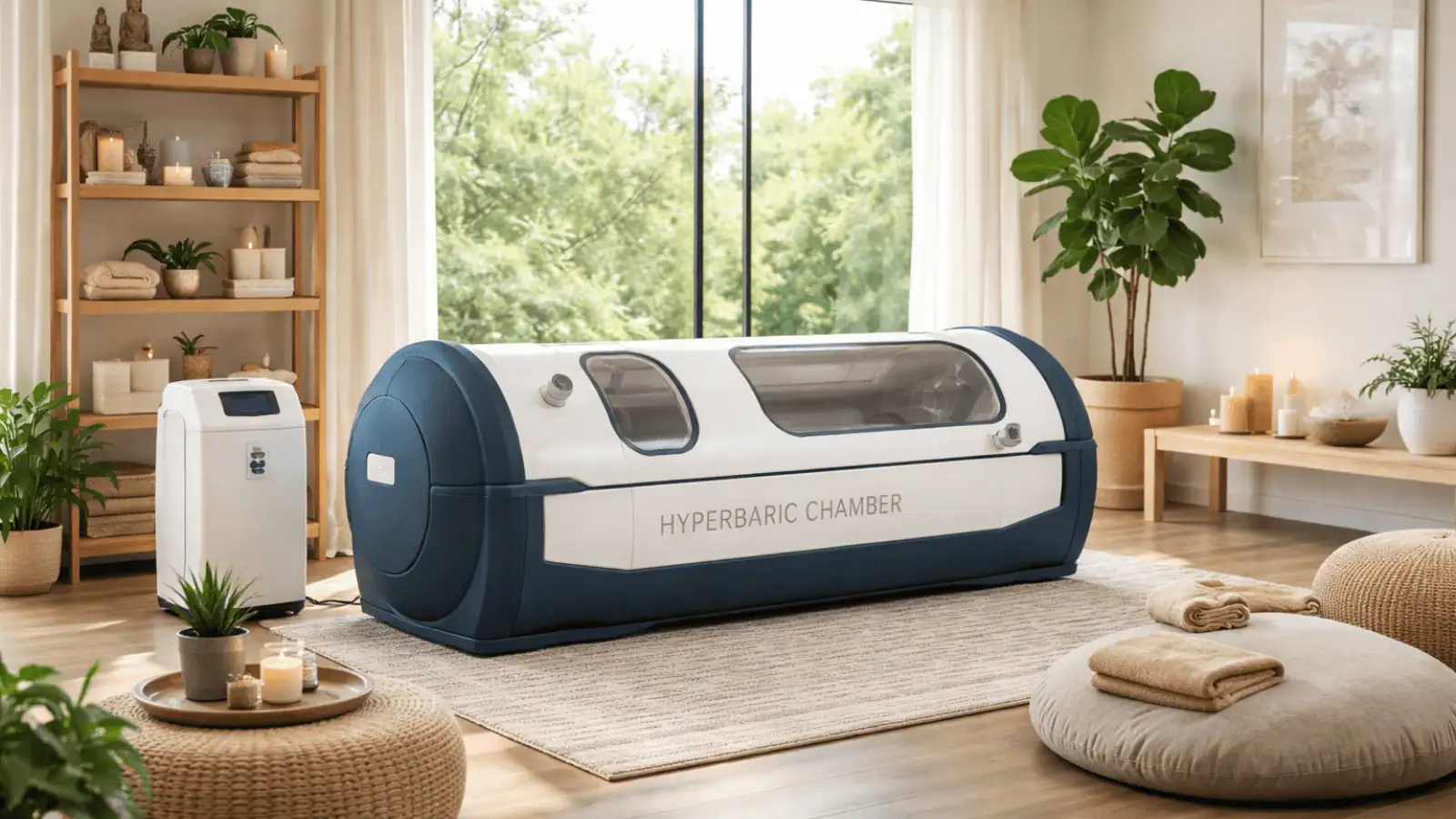
This is one reason home placement matters more than many people expect. A chamber in a chaotic, cluttered, or inconvenient area is harder to use consistently. A chamber placed in a calm, dedicated recovery area is more likely to become part of a sustainable routine.

Common mistakes people make when evaluating results
The biggest mistake is expecting mental performance benefits too quickly. Focus is variable by nature, so trying to judge HBOT from one or two sessions usually leads to bad conclusions. Another mistake is stacking too many changes at once. If someone starts HBOT, changes caffeine habits, sleeps more, and reduces training intensity in the same week, it becomes impossible to know what is actually helping.
Other common evaluation mistakes include:
- judging “focus” only by mood in the moment
- ignoring recovery debt and assuming the chamber should solve everything
- overlooking practical friction, such as setup inconvenience or lack of routine
- confusing marketing language with clinically established outcomes
The better approach is to assess bigger patterns: afternoon crashes, sustained concentration, post-work fatigue, mental steadiness, and how often you feel clear versus overloaded. That type of tracking is much more useful than asking whether you feel like a different person after a single session.
Safety, limits, and when to be careful
Even when people approach HBOT from a wellness angle, it remains a therapy with real safety considerations. It is generally regarded as safe when used appropriately, but it is not casual equipment in the way a meditation app or light stretching routine might be. Adverse effects can include ear barotrauma, sinus discomfort, anxiety or claustrophobic reactions, and oxygen-toxicity-related issues in certain circumstances. NIH resources and safety reviews consistently note that the most common concerns involve pressure-related effects such as middle-ear barotrauma NIH StatPearls on hyperbaric complications, PubMed safety review.
It is also important to remember that HBOT has recognized medical contraindications. NIH clinical reference material notes that an untreated pneumothorax is an absolute contraindication NIH StatPearls on contraindications. That does not mean HBOT is unsafe by default. It means thoughtful screening and appropriate guidance matter.

How to decide whether HBOT is a sensible tool for your goals
If your main goal is better focus, ask yourself what is really driving the problem. If the answer is poor sleep, chaotic workload, stress spillover, or inadequate recovery, HBOT may be worth exploring only as one part of a broader plan. If your issue is simply wanting more productivity despite already-strong habits, expectations should stay modest.
A good decision framework is:
- First: identify whether your “focus problem” is really a recovery problem.
- Second: determine whether you can realistically use a chamber consistently.
- Third: evaluate whether your interest is exploratory wellness support or a medically supervised need.
- Fourth: compare chamber types, setup demands, and home-space realities before buying.
Readers who are still in the comparison stage should review the full buyer’s guide, the broader benefits page, and our article on whether HBOT is right for you before making assumptions based on one outcome goal.
Frequently asked questions about HBOT for focus
Can HBOT directly improve concentration?
It may support concentration in some contexts, especially where recovery, fatigue, or broader cognitive strain are part of the picture, but it should not be presented as a guaranteed concentration enhancer for everyone.
Is HBOT a replacement for sleep, stress management, or recovery basics?
No. HBOT may complement those fundamentals, but it does not replace them. In many cases, the basics determine whether any supportive therapy feels meaningful at all.
Are the mental-performance claims fully established?
No. There is interesting research around cognition and neuroplasticity, but the evidence is still best interpreted carefully and in context. That is especially true for healthy adults seeking general “optimization.”
Where to go next if you are researching chambers and use cases
If this topic caught your attention because you are comparing chamber options, the next step is usually practical rather than theoretical. Think about use setting, space, consistency, recovery goals, and whether you are interested in home use or simply learning the landscape first. Our Hyperbaric Sage blog covers foundational education, while the contact page is the best place to reach out with editorial questions.

For many readers, the most useful research sequence is:
- start with benefits and safety
- compare chamber categories
- look at realistic home-use expectations
- only then move into specific products or chamber types
Final thoughts on hyperbaric oxygen therapy for focus and mental performance
Hyperbaric oxygen therapy for focus and mental performance is best understood as a supportive recovery-oriented concept, not a miracle productivity tool. The biological rationale is real: HBOT changes oxygen delivery in meaningful ways, and the research literature includes encouraging signals around cognition, neuroplasticity, and recovery-related outcomes in selected populations. But the most honest interpretation is still a conservative one.
If you are curious about HBOT because you feel mentally flat, overstretched, or inconsistent, it may be worth exploring as part of a bigger recovery framework. If you are expecting a guaranteed jump in concentration just from entering a chamber, your expectations are probably too high. The better lens is whether HBOT may help create a healthier foundation for mental clarity over time.
Keep Researching the Right Way
Start with the fundamentals, then compare real chamber options in our Best Hyperbaric Oxygen Chambers guide →