
Healing Dives Explorer Review
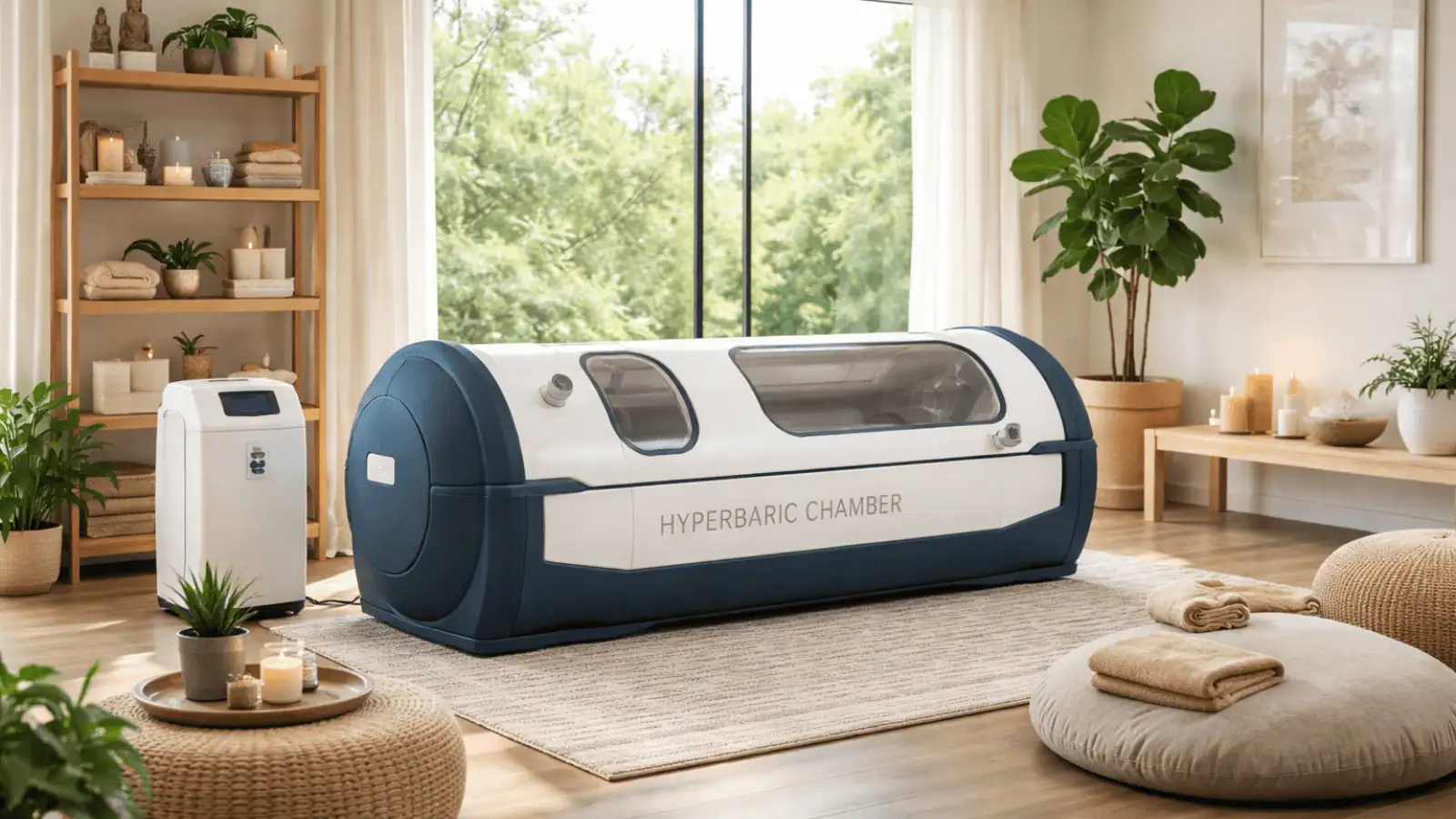
The Healing Dives Explorer review is best approached as a practical buying guide for someone considering a portable mild hyperbaric setup rather than a clinic-style hard-shell chamber. Public Healing Dives materials describe the company’s chambers as U.S.-made portable units, note a lineup of multiple horizontal and vertical options, and emphasize features such as a bright interior, quieter operation, and easy home use. On its public materials, Healing Dives also highlights mild chamber pressure ranges around 1.3 ATA, which places the brand squarely in the home-use portable category rather than the higher-pressure clinical category.
That matters because hyperbaric oxygen therapy is not one single buying category. A person comparing home-use mild chambers is usually asking a different question than a clinic buyer evaluating large hard-shell systems. Home buyers care more about footprint, daily usability, comfort, routine consistency, zipper and frame practicality, and whether the chamber actually fits their recovery space. They also need a realistic understanding of what HBOT is and is not. Major medical sources such as Mayo Clinic and Cleveland Clinic describe HBOT as oxygen delivered in a pressurized environment, while published research continues to examine how increased oxygen availability may support tissue oxygenation and recovery-related processes in certain contexts.
For readers building out a home setup, the bigger question is not whether the category sounds impressive. The real question is whether the Explorer appears to make sense as a home routine chamber. Based on publicly available Healing Dives brand information, this looks like the sort of chamber that will appeal most to buyers who want a mild portable system with a stronger focus on at-home practicality than on medical-facility style infrastructure.
Compare Before You Commit
If you are still weighing home-use options, review our broader Best Hyperbaric Oxygen Chambers buyer’s guide →
What we could confirm about the Healing Dives Explorer
One important point up front: publicly indexed information on the exact Explorer configuration is more limited than it is for some other chambers. Healing Dives’ public-facing materials clearly present the brand as a portable hyperbaric manufacturer and describe a product family that includes several chamber sizes and formats, but the specific Explorer listing is not as prominently indexed as some of the brand’s other models. That means this review should be read as a decision-focused editorial assessment based on the brand’s visible chamber design language, portable category positioning, and the way Healing Dives describes its chambers overall.
Across public Healing Dives materials, the brand describes its chambers as bright, quiet, and easy to use, and its features page describes a strong translucent white urethane-coated nylon material intended to create a brighter interior than many darker portable chamber designs. Public product pages that are indexed for other Healing Dives models also repeatedly describe 1.3 ATA operating pressure, reinforcing that the brand’s lineup is rooted in the mild portable category rather than high-pressure medical units.
That gives us a useful framework for evaluating the Explorer. Even without a deeply indexed public spec sheet for this exact model, the available brand-level information strongly suggests that the Explorer should be evaluated on the criteria that matter most for mild home chambers: comfort, ingress and egress, brightness, space efficiency, daily usability, and whether the overall form factor supports consistent use in a home setting.
Where the Explorer fits in the home HBOT market
The Explorer appears to fit the portable mild hyperbaric chamber segment. That segment serves a very different buyer than the one shopping for a hard-shell unit. A portable mild chamber is usually chosen by people who want to integrate sessions into everyday home life without dedicating an entire room to a large clinical-style installation.
That usually means the Explorer is most relevant to readers who want some combination of the following:
- a chamber that can work in a normal home wellness room, spare bedroom, or recovery corner
- a lower-complexity setup than large hard-shell systems
- a more approachable first purchase into the HBOT category
- a system designed around consistency and routine rather than clinic throughput
If that sounds like your use case, the Explorer is not competing against the biggest clinical chambers. It is competing against other mild hyperbaric chambers for home use and other soft-sided hyperbaric chambers where the key differences often come down to roominess, visibility, material feel, support accessories, compressor noise expectations, and how burdensome the ownership experience feels after the first few weeks.
Comfort and interior experience may be the Explorer’s strongest angle

A surprisingly large part of home HBOT satisfaction comes down to whether the chamber feels psychologically and physically manageable. Healing Dives publicly emphasizes brightness and visibility in its chamber materials, and that is more important than it sounds. A brighter interior can make the difference between a chamber that feels tolerable for occasional use and one that feels easy enough to keep using several times a week.
For many home buyers, the real barrier is not technical operation. It is willingness to return to the chamber repeatedly. If a chamber feels cramped, dim, or cumbersome, routine adherence often drops. A brand emphasis on translucent bright interior materials is therefore a meaningful positive for the Explorer category-wise, because comfort is often a deciding factor in whether a home chamber becomes part of a long-term recovery routine.
This is especially true for users who plan to read, relax, or simply decompress mentally during sessions. A softer, brighter, less cave-like experience can be a genuine quality-of-life advantage. That does not turn the Explorer into a medical outcome claim, but it does make it easier to understand why this type of chamber may appeal to home users who care about consistency and livability.
Setup, space, and home placement considerations
If you are considering the Explorer, think first about where it will live. The best chamber on paper is still the wrong purchase if it dominates your room, creates a noisy and awkward recovery area, or requires too much effort every time you want to use it.
Portable chambers usually work best in one of four environments:
- a dedicated wellness room
- a spare bedroom with enough clearance for entry and exit
- a home gym recovery zone
- a calm office-adjacent room where routine sessions can happen during predictable blocks of the day
The Explorer seems best suited to buyers who want a chamber that can become part of a repeatable home rhythm without feeling like commercial medical equipment moved into the house. That makes it a reasonable fit for readers prioritizing home integration over clinical presence.
If your real goal is a chamber for multiple users, wheelchair accessibility, or a more vertical walk-in experience, Healing Dives’ public lineup indicates that the brand also serves larger and more specialized portable formats. In that sense, the Explorer likely works best when your priority is straightforward personal or household use rather than the broadest possible accessibility profile.
What mild HBOT can and cannot realistically offer

Any honest Healing Dives Explorer review should keep expectations grounded. Major medical references describe HBOT as therapy delivered in a pressurized environment, and peer-reviewed literature has examined how hyperoxia and pressure may influence oxygen delivery, signaling pathways, and tissue support processes. That said, a mild portable chamber should not be framed the same way as a higher-pressure hospital or wound-care protocol.
In practical terms, what many home users are really buying is a wellness and recovery routine tool. They are looking for support around consistency, general recovery practices, training lifestyle management, or broader home wellness goals. They are not buying a guaranteed cure, and they should not expect any portable chamber to substitute for individualized medical care.
If you want a more science-grounded overview before choosing a chamber, read our guides on hyperbaric oxygen therapy benefits and what hyperbaric oxygen therapy is. That background helps put the Explorer in the right buying context.
Who the Healing Dives Explorer is best for
The Explorer looks most sensible for buyers who want a chamber that feels realistic for home ownership. That includes:
- wellness-focused home users who want a chamber that fits into daily or weekly routines
- recovery-minded buyers who want a soft portable category option rather than a permanent hard-shell installation
- first-time HBOT shoppers who value usability and comfort over clinical-style hardware presence
- households with limited dedicated space that still want a more serious at-home recovery setup
The Explorer is especially appealing if your purchase priorities are centered around the ownership experience: how the chamber looks in the room, how manageable it feels to enter and use, and whether the environment is pleasant enough that you will actually keep using it.
That kind of buyer usually does better with a chamber that feels calm, bright, and repeatable instead of one that seems impressive on paper but becomes disruptive in everyday life.
Who may want a different chamber category

The Explorer may not be the right fit if your needs point toward a more specialized format.
- If you want a more clinical-feeling setup, you may be better served by reviewing hard-shell hyperbaric chambers.
- If your budget is the main deciding factor, start with our budget hyperbaric chamber roundup.
- If you need unusually high interior room, a vertical entry style, or wheelchair-oriented access, other Healing Dives models in the public lineup appear more relevant than the Explorer.
- If your goals are strictly medical, condition-specific, or physician-directed, you should evaluate chamber decisions within the guidance of a qualified clinician rather than relying on a consumer review alone.
In other words, the Explorer seems strongest when judged as a home-use mild chamber, not when stretched into use cases better served by clinical or specialty systems.
What day-to-day ownership is likely to feel like
The most useful way to think about the Explorer is through the lens of routine. In real homes, chamber ownership becomes a lifestyle question more than a spec-sheet question. Will you use it in the morning before work? After training? During a calm evening recovery block? Can one person manage the setup and basic session flow without turning it into a production?
Healing Dives markets its chambers around usability, and that positioning makes sense. Portable chambers succeed when they are not intimidating. A chamber that is easy to integrate into a room and feels pleasant enough to revisit has a much better chance of becoming part of a real-world routine.
That is one reason the Explorer appears more compelling for steady home users than for people chasing prestige or maximum pressure. The better question is not “Is this the most extreme chamber?” but rather “Is this the kind of chamber I will actually keep using?” For many home buyers, that is the question that matters most.
How the Explorer compares conceptually with other portable mild chambers

Compared with many portable mild chambers, the Explorer’s biggest potential differentiators appear to be brand positioning around brightness, livability, and home comfort. Some competitors lean heavily into technical marketing language, but a lot of buyers simply want a chamber that feels inviting and manageable.
That does not mean the Explorer automatically wins the category. It means its strongest angle may be experiential rather than purely numeric. If you are comparing multiple soft-sided or mild portable chambers, the most relevant comparison points are likely to be:
- interior brightness and visibility
- perceived spaciousness
- ease of entry and exit
- how disruptive the system feels in a normal home room
- whether the chamber seems built for daily life rather than occasional novelty use
On those criteria, the Healing Dives brand language gives the Explorer a credible case for buyers who prioritize comfort and routine usability above category bravado.
Safety, caution, and expectation setting
Even a home-use mild chamber should be approached seriously. People interested in portable HBOT should understand not only the potential appeal of pressurized oxygen environments but also the importance of safe operation, manufacturer guidance, and individualized health considerations. If you are new to the category, it is worth reviewing our guide on how to use hyperbaric oxygen therapy safely before buying.
Medical institutions such as Cleveland Clinic and Mayo Clinic also note that HBOT is not appropriate for every situation and that treatment plans in clinical settings are structured around patient-specific considerations. That same caution should shape how consumers evaluate home chambers. A review can help clarify category fit, but it should not replace informed clinical judgment where medical questions are involved.
Final buying verdict on the Healing Dives Explorer
The Healing Dives Explorer appears most attractive as a comfort-forward portable mild hyperbaric option for home users who value daily usability more than clinical-style intensity. Based on publicly visible Healing Dives brand information, the chamber category it belongs to is built around portability, a bright interior experience, and approachable home operation.
That makes the Explorer a sensible option for a buyer who wants:
- a chamber that feels realistic in a home environment
- a softer ownership experience than large hard-shell systems
- a routine-oriented wellness and recovery tool
- a product from a brand that visibly centers portable chamber use
The main limitation is transparency of indexed model-specific detail. If you are seriously considering the Explorer, you should confirm the exact configuration, dimensions, included accessories, compressor setup, and room requirements directly with the manufacturer before purchase. But from an editorial standpoint, the Explorer looks like a chamber best suited to buyers who want a home system they can actually live with.
Healing Dives Explorer review: bottom line
If your priority is a portable chamber that appears designed for real home use rather than for showroom drama, the Explorer deserves a spot on your shortlist. Its likely strengths are comfort, visibility, and routine friendliness. Its biggest question mark is not category fit, but how much exact model-level detail you confirm before purchase.
For many buyers, that leads to a clear conclusion: the Explorer makes the most sense when you want a mild home chamber that supports consistency, fits normal living space constraints, and avoids the burden of a more clinical-feeling system.
Frequently asked questions
Is the Healing Dives Explorer a hard-shell chamber?
Based on Healing Dives’ public product positioning, the Explorer belongs in the portable mild chamber conversation rather than the hard-shell clinical chamber category.
What kind of buyer is the Explorer best for?
It appears best for home users who care most about comfort, space practicality, and repeatable routine use.
Should you buy the Explorer without confirming specs first?
No. Because indexed public detail on the exact Explorer configuration is limited, it is smart to confirm size, included equipment, and room-fit details directly before buying.
Keep Researching the Category
See our full chamber comparisons in the Hyperbaric Sage blog → or contact us through our contact page →